Showing posts with label nonfiction. Show all posts

Monday, March 6, 2023

Digital Data Security by Heather C. Hudak

This is a well-rounded look at data security written on at a middle school reading level explaining how data breaches happen and how readers can protect themselves. Readers are also given information about digital literacy, and each chapter introduces important vocabulary,  as how to research more about digital data security. The author also explains how to evaluate primary, secondary and tertiary sources.  

Text blocks are broken up by pictures, charts and graphs to highlight information. This book is a great starting point for learning  about digital data security and information literacy.--Claudio Leon


Hudak, Heather C. Digital Data Security. Crabtree Publishing Co. 2019. Print

Friday, December 9, 2022

Cryptocurrency By Matt Chandler

For the reader looking for a very basic understanding of cryptocurrency, this book provides just that. Written at a 6th grade reading level, Cryptocurrency keeps things very simple covering the history of how this relatively new currency came about,  how it works, its advantages and disadvantages,  and how one acquires and uses cryptocurrencies. 


And finally the book addresses the dangers that have emerged with cryptocurrency’s proliferation.


Students who want to learn about digital currencies and investments should pick up Cryptocurrency.  – Claudio Leon

Tuesday, October 4, 2022

Don’t Mess With Me By Paul Erickson


Have you ever been curious about venomous sea creatures? Well you’re in luck!  Don’t Mess With Me is filled with tidbits of information about some of the most insane and deadly creatures living in the sea! On every page beautiful images are accompanied by text explaining how and why the featured creature attacks, and  sometimes highlighting something extraordinary about it. Anyone interested in dangerous animals or sea life should pick this one up!--Claudio Leon

Erickson, Paul. Don’t Mess With Me. Tilbury House: Thomaston, 2018. Print.

Wednesday, December 22, 2021

Fallout: Spies, Superbombs, and the Ultimate Cold War Showdown by Steve Sheinkin

With a gripping narrative,  author Sheinkin describes the Cold War’s arms race and the space race,  first dropping the reader into the streets of Brooklyn.   There a spy’s meticulously crafted device finds its way into the hands of a teenage boy.   


From the local to the global,  Sheinkin brings alive the competition between the United States and Soviet Russia and invites us to experience suspense at the brink of global nuclear destruction -  a chess game played by JFK and Nikita Kruschev.  


Hearty backmatter includes source notes, an extensive bibliography, acknowledgements, image credits, and an index.  --Jessica Fenster-Sparber

Tuesday, November 30, 2021

Hidden Oil by Fabrice Erre Illustrated by Sylvain Savoia


Where does oil come from?  How was it used in ancient times?   And how did it become the essential commodity it is in our society today?  


This brief overview begins at the beginning in a comic fashion, and in 46 pages this small book gives a valuable perspective to English language readers who are curious to understand oil’s history.  The young age of the narrators may limit the book’s appeal to teens,  but those who can see past that will find a trove of information, including the timeline, short bios, overviews of UAE and a summary of oil and pollution.  Recommended for sparking inquiry, developing schema and as a Social Studies supplementary text.  --Jessica Fenster-Sparber


Thursday, June 1, 2017

Born a Crime: Stories from a South African Childhood


Apartheid in South Africa is not a topic students or teachers usually approach with humor, which makes Noah’s book unique in a school library collection.  Using both his lived experience as well as his famous trademark humor, Noah recounts his childhood in South Africa as a multiracial young person through anecdotes.  The book is structured to provide enough context between anecdotes to offer readers the necessary schema to both laugh at Noah’s jokes and begin to comprehend the horrors of the South African system of apartheid.  In doing so, this book is sure to broaden readers’ comparative perspectives on state-sponsored racism and is likely to lead a curious mind to wonder about the history of a nation they may previously only have connected to the name Nelson Mandela.  Teens may enjoy discussing Noah’s perspective on serious matters like, crime, poverty, and domestic violence, all of which are woven throughout the book.  Recommended for older teen readers as well as book clubs. --Jessica Fenster-Sparber

Noah, Trevor.  Born A Crime: Stories of a South African Childhood.  New York: Spiegel & Grau, 2016.  Print.

Click here for a short discussion guide published on the blog Book Chatter.

Thursday, May 25, 2017

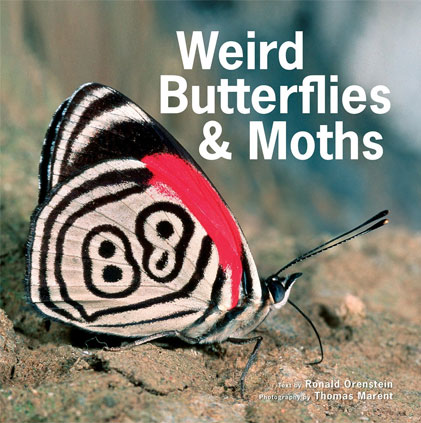
Weird Butterflies & Moths Text by Ronald Orenstein Photography by Thomas Marent

Both images are from the photographer's website, www.thomasmarent.com


Thomas Marent’s stunning high-definition photographs of moths and butterflies are each accompanied by six to eight sentences from Dr. Ronald Ornstein who holds a PhD in zoology and has authored numerous books on science and nature.  His tack in this title is to whet the reader’s appetite for more with intriguing facts about butterflies and moths.  The last third of the book showcases some of the more surprising images of caterpillars and a couple of pupas. This book will work well for developing a student’s interest in an inquiry undertaking and can be read from start to finish or browsed.  Backmatter is limited to an index and Orenstein’s one-page introduction provides a welcoming invitation to this 63-page volume.  Perfect for reluctant readers and less-sophisticated adolescents reading at an upper-elementary or lower-middle school level. —Jessica Fenster-Sparber

Orenstein, Ronald and Thomas Marent.  Weird Butterflies & Moths.  New York: Firefly Books, 2016.  Print.

Monday, March 20, 2017

Random Family by Adrian Nicole Leblanc


Random Family follows the true life of Jessica, a young sixteen-year-old girl living in one of the poorest sections of the South Bronx during the Eighties. Jessica’s story is an eye-opener for anyone unfamiliar, and even for those familiar with the daily struggles of poverty. Leblanc does a phenomenal job immersing the reader in the challenges and life-altering decisions that the characters must make on a regular basis in order to survive the struggles of living in poverty. For this reader, Random Family is a painful read as I perceive the consequences of the choices the characters make.  It’s painful to watch how one often solves a problem by creating another problem due to the lack of opportunity and choices that are available.  This book is written for anyone reading at a high school level and above. Students who have read and liked Fist Stick Knife Gun will enjoy reading Random Family. --Claudio Leon


Click here for a reading group discussion guide from Simon and Schuster.  Click here for an interview with the author of Random Family ten years after it was published.

Leblanc, Adrian Nicole. Random Family. New York: Scribner, 2004. Print.

Wednesday, September 21, 2016

Members Only: Secret Societies, Sects, and Cults -- Exposed! By Julie Tibbot


What are they hiding?  So begins this tantalizing non-fiction title, preparing the reader to delve into the secret (and sometimes not-so-secret) histories of twenty-two groups following alphabetic order and concluding with the Thugees, which, I was fascinated to learn, is with whom the word “thug” originates.  Each chapter follows a template which provides the date or period in which the group originated, their current status, and summarizes in one sentence the group’s exclusivity, secrecy, threat, and quirkiness.  
After this half-page profile in a text box, Tibbott goes on to introduce the reader to the history and background of the group, followed by a section on how to get in and what reportedly goes on within the group.  Interspersed throughout the text are photographs, symbol illustrations, and relevant features on topics.  Examples include Zora Neale Hurston’s account of meeting Felicia Felix-Mentor (an allegedly zombified woman) following the chapter on the Bizango (founded in Haiti in the 18th century), and a list of big name Masons ( including contemporary public figures Jesse Jackson and Shaquille O’Neal along with historical personages like Oscar Wilde and George Washington).  Perfect for older adolescent readers requesting information on the Illuminati (see page 89), the biggest problem with this book is that unsurprisingly, the author chose not to cite her sources. --Jessica Fenster-Sparber


Tibbott, Julie.  Members Only: Secret Societies, Sects and Cults--Exposed!  San Francisco: Zest Books, 2014.  Print.

Wednesday, February 10, 2016

Drowned City: Hurricane Katrina & New Orleans by Don Brown


“What happened at the N’awlins?”


Teen readers are too young to remember Hurricane Katrina, but Beyonce may have just inspired their curiosity with this weekend’s release of her new video “Formation.”  For adolescent readers wondering why the pop star depicts herself atop a submerged police car, and, later, drowning atop that car, or those struggling to connect the dots between the drowning imagery and the video’s juxtaposition of graffiti that reads “Stop shooting us” at 4:26, Don Brown has written and illustrated a compelling, grave, illuminating and now award-winning volume.  In full color with shades and tones of sadness, this text is less than 100 pages long and most pages contain a maximum of two sentences of text, making this highly recommended for reluctant teen readers with a taste for graphic novels and teachers looking for a hybrid non-fiction text.  This book concludes with a thorough listing of source notes, a bibliography, and a closing dedication.--Jessica Fenster-Sparber

Brown, Don.  Drowned City:  Hurricane Katrina & New Orleans.  Boston:  Houghton Mifflin, 2015.  Print.

Wednesday, June 24, 2015

Red Madness: How a Medical Mystery Changed What We Eat by Gail Jarrow


Have you ever stopped to wonder why our cereals are all fortified with niacin and other vitamins and minerals?  The answer is rooted in a mysterious disease called pellagra.  Its symptoms included: thick, painful, scaly red skin on the hands, feet, face, and chest; foul-smelling, chronic diarrhea; progressive insanity; and, finally, death.  As it ravaged the countryside, and occasionally the parlors of the rich, in the early 1900s, doctors struggled to determine its cause and to find an effective treatment.  Is it infectious?  A parasite?  A deficiency?  In Red Madness, author Gail Jarrow has woven together a vast collection of primary documents (including photographs, newspaper articles, journals, advertisements, and maps) to tell the harrowing tale of the race to cure pellagra.  Backmatter includes frequently asked questions, a glossary, timeline, author’s note, source notes, bibliography, index, and sources for further information.  --Regan Schwartz

Educator's guide available from the publisher here.

Jarrow, Gail. Red Madness: How a Medical Mystery Changed What We Eat. Honesdale, PA: Calkins Creek, 2014. Print

Friday, June 19, 2015

Magic Card Tricks by Nicholas Einhorn


I cannot begin to tell you how many times students have asked me for books about card tricks.  Magic Card Tricks features a range of tricks at different levels of ability, each with step by step instructions and full color photographs illustrating each step.  Most tricks are managed with a deck (or two) of cards, though more advanced gimmicks require materials that may not be immediately available to students.  A thorough introduction gives an overview of magic performance and a brief history of card magic that segues smoothly into a section on basic card handling techniques.  Front and back matter includes a table of contents, glossary, index, and an international list of suppliers.  While there is no substitute for learning from a pro (or from video), Magic Card Tricks is a well-organized resource which manages to pack a great deal of information into a slim, accessible volume.  --Regan Schwartz

Einhorn, Nicholas. Magic Card tricks. Leicestershire, UK: Southwater, 2012. Print.

Thursday, March 26, 2015

Marian Anderson: A Voice Uplifted by Victoria Garrett Jones


Why was vocal artist Marian Anderson awarded the United Nations Peace Prize?  Why did she receive the Presidential Medal of Freedom?  Victoria Garrett Jones leads the curious reader through Anderson’s life beginning with her birth in 1897, and filling the reader in on social and historical context through page-length features on topics like “Spirituals”, “Black Jews” (Anderson’s grandfather identified as such), Anderson’s packing habits (she sometimes traveled with more than twenty-five pieces of luggage at a time!) and key figures in her life and times.  The neat layout, ample white space, and well-selected accompanying images make this volume a strong selection for less-sophisticated older readers.  Helpful front matter includes a timeline of Anderson’s life and backmatter includes a glossary, a bibliography, and an index.  Readers with an interest in American history, black history, civil rights, and music will find much to appreciate.  Patrons requesting a true rags-to-riches story need look no further. --Jessica Fenster-Sparber

Jones, Victoria Garrett.  Marian Anderson: A Voice Uplifted.  New York: Sterling, 2008.

Click here for a calendar-based activity which invites students to write a public letter regarding their feelings on a present-day social injustice.   Within the lesson, students may read Eleanor Roosevelt’s letter of resignation to the Daughters of the American Revolution upon learning that they would not permit Marian Anderson to perform in Constitution Hall  (an image of Roosevelt’s letter is printed in Jones’ book on page 74.)

Monday, March 9, 2015

Nazi Hunters: How a Team of Spies and Survivors Captured the World’s Most Notorious Nazi. By Neal Bascomb


Nazi Hunters is a compelling example of narrative non-fiction that reads like a true spy novel. The pages are filled with primary sources gathered during the suspenseful hunt for Adolf Eichmann, the orchestrator of the Nazi’s Final Solution. Nazi Hunters begins with the retelling of Eichmann’s rise to power in the Nazi Party, the end of World War II, and his escape to Argentina. Sixteen years later he was found and a team of special Israeli spies was sent out to secretly capture him and smuggle Eichmann back to Israel where he could stand trial. Through the spies’ retelling of the story, we learn about the preparation and dangers of the mission. From disguises to hidden cameras, the Israeli spies employed every trick up their sleeves to confirm the man they would capture was indeed the man they sought for his involvement in the death of millions.

Nazi Hunters is a great read for high school students interested in the Holocaust, spy novels or the events surrounding World War II.  The text is supplemented by photographs, maps, and documents used during the reconnaissance, capture and escort phases of the mission. --Claudio Leon

Bascomb, Neal. Nazi Hunters: How a Team of Spies and Survivors Captured the World’s Most Notorious Nazi. New York: Arthur A. Levine Books. 2013. Print.

For a few discussion questions from the folks at Unleashing Readers, click here.

Monday, February 9, 2015

The Other Wes Moore: One Name, Two Fates by Wes Moore


What’s in a name? A neighborhood? A brother? A block?  These questions loom large for two young men, both named Wes Moore, born less than a year apart and raised in similar Baltimore neighborhoods.  Both fatherless (one through medical tragedy and one through the tragedy of abandonment), both raised by single mothers in tough circumstances, both eager to prove themselves, and both called to the streets - one is now serving a life sentence for murder and one is a Rhodes scholar.  That scholar set out to find out how and why their paths diverged so wildly - the result is part memoir and part journalistic inquiry.  The Other Wes Moore tells both of their stories chronologically from birth in three large acts, in vivid detail.  Readers looking for true-life stories about street life and the violence encountered there may find what they seek in The Other Wes Moore, though the action is tempered by introspection and the sophisticated language does not evoke the action-packed street books students may be craving. However, the book is practically tailor-made for book groups with backmatter that includes a reader’s guide, discussion questions, a hefty resource guide, and an afterword by Tavis Smiley. --Regan Schwartz

Moore, Wes. The Other Wes Moore. New York: Spiegel and Grau, 2010. Print.

Thursday, January 22, 2015

Bad Girls by Jane Yolen and Heidi E.Y. Stemple


History is full of women who would not behave - some were criminals while some were fighting for a place in a society that had no place for them.  Unfortunately, their stories have often gone overlooked and untold.  In Bad Girls, the mother-daughter team of Yolen and Stemple have profiled twenty-four infamous ladies, capping each woman’s chapter with a one-page comic of the authors performing their research, debating the subject’s badness, and discussing the cultural context for each subject’s actions.  The book’s conclusion focuses on this cultural context and how gender roles have changed over time.  It encourages readers to draw their own conclusions about the women featured within which may make for lively debate.  With an extensive bibliography and index, Bad Girls is an excellent text for inquiry, in addition to being an engaging read. --Regan Schwartz

Discussion guide available from the publisher here.

Yolen, Jane and Heidi Stemple. Bad Girls: Sirens, Jezebels, murderesses, thieves, and other female villains. Watertown, MA: Charlesbridge, 2013. Print.

Thursday, December 4, 2014

Quicksand: HIV/AIDS In our lives by Anonymous


For a student who needs immediate answers, or a teacher looking for a slim volume to read through with students during a non-fiction ELA unit, Quicksand’s length and hybrid format offer an interesting option.  Opening with a first-person narrative, this quick read is eighty-five pages of large font with plenty of white space. Quicksand commences with a chapter entitled “Why I Wrote this Book: The Still Hidden World of HIV/AIDS in America” and uses subtitles like “What is AIDS?” and “How can you tell if someone has HIV?” to toggle between the anonymous author’s experience learning about her brother-in-law’s diagnosis and anticipating the reader’s questions.  The author keeps the text simple enough for a less-experienced, yet  proficient reader to comprehend the content, but the unique format will be best navigated with a knowledgeable guide for less-experienced readers, recommending this text to ELA teachers, social workers, and reading and ESL specialists.  Backmatter includes websites for more information about HIV/AIDS (essential for updated information since this book appears to have been written in 2008), a glossary for terms like “window period” and “viral load,” a narrated bibliography of works consulted, acknowledgements, and an index. --Jessica Fenster-Sparber

Anonymous.  Quicksand:  HIV/AIDS in our lives.  Fairfield: Candlewick Press, 2009.  Print.

Wednesday, December 3, 2014

Scholastic Ultimate Guide to Football by James Buckley Jr.


Scholastic Ultimate Guide to Football by James Buckley Jr.

Did you know that passing was not allowed in American football until 1906?  Taking an informal tone, Buckley’s Guide mixes history, random facts, statistics, photographs, and cartoonish drawings to provide an introduction to America’s most popular sport.  Assuming some prior knowledge of the game, the Guide alternates between informational pages on each of the National Football League’s 32 teams and features on football trivia like superstitious practices used by NFL players, regrettable quotes and actions from NFL coaches, classic referee signals currently in use, and touchdown heroes.  Each team’s two-page spread includes the year the team formed, a highlight and low point for the team, their home venue, number of Superbowls won, best seasons and additional team facts.  Backmatter includes a few additional print and web-based resources for information on American football and an index.  Teens may not appreciate Buckley’s corny jokes, but those with an interest in broadening the scope of their knowledge of the sport will be glad to have so much information in one lightweight volume. --Jessica Fenster-Sparber

Buckely Jr., James.  Scholastic Ultimate Guide to Football. Santa Barbara: Shoreline Publishing, 2010.  Print.

Click here for a link to Edutopia's lesson plans for a variety of subject areas incorporating American football.

Monday, December 1, 2014

Why Are We Still Getting HIV? Teens Respond to the AIDS Epidemic Edited by Laura Longhine


35.3 million people are living with HIV around the world, according to UNAIDS, cited on HIVaware.org.uk.  35.3 million.  Asking anyone to contemplate the size of that number is a challenge, and Youth Communication’s Why Are We Still Getting HIV? offers numerous angles from which teachers, parents, and other youth workers (including peer educators) can approach the topic through interviews and personal narratives.  This collection includes both anonymous and credited teen authors’ perspectives on HIV, ranging from what it’s like to go for a first HIV test (“What If…” by Anonymous), to having a peer or adult share their positive status (“Saying Goodbye to Uncle Nick,” by Josbeth Lebron, “A Sad Silence,*” by Desiree Guery), to receiving notification of one’s own HIV positive status (“Date with Destiny” by Anonymous,) as well as dealing with a loved one dying from AIDS (My Uncle Died of AIDS” by Anonymous), and living a long life while HIV positive (“All Too Real: Teens Living with HIV*” by NYC Writers and “Twenty Years Living Positive” interview with Dave Nisbett.)  Back matter includes separate notes to teens and staff trainers as well as a discussion guide for teachers and staff on how to use the book effectively.  While the writing varies in style and tone, it is generally very accessible to teens who are reading proficiently and a worthwhile resource in spite of the fact that there have been some significant updates to the American conversation taking place around AIDS since many of these stories were written. --Jessica Fenster-Sparber


*These two stories are available for free in full-text and with lesson plans provided by YC Teen.


Longhine, Laura (Ed.)  Why Are We Still Getting HIV? Teens Respond to the AIDS Epidemic.  New York: Youth Communication, 2010.  Print.

Monday, November 24, 2014

Volcano: Iceland’s Inferno and the Earth’s Most Active Volcanoes edited by Ellen J. Prager


There is little on earth to rival the sheer majesty and destruction of a volcano.  They are a fact of life for so many people (did you know that 1 in 12 people live in an active volcano zone?), yet  for many of our students they are only the stuff of history books and remote news reports.  Volcano brings their power, danger, and beauty to brilliant life on every page.  Beginning with an overview of the geology of volcanoes, the text is organized geographically, highlighting major volcanoes from each region.  The one-page history on each volcano is accompanied by a sidebar listing brief facts and pages of dynamic, full-color photographs with informative captions depicting both the volcano and the people living in its shadow.  Backmatter includes sources and credits.  While the text recommends the book to confident readers, the high-interest subject matter, photographs, and large-font quotes make it a popular choice for anyone interested in natural disasters.--Regan Schwartz

Prager, Ellen, ed. Volcano: Iceland’s Inferno and the Earth’s Most Active Volcanoes. Washington DC: National Geographic, 2010. Print.