Monday, January 25, 2016

Between Me and the World by Ta-Nehisi Coates


Is this relatively small, relatively short book going to appeal to Passages’ students?

Addressed to Coates' fifteen-year old son, which Tressie McMillam Cottom discusses as a literary device, this book is alternatingly approachable and impenetrable for less sophisticated readers thanks to its uneven, complex structure.  Teens will be interested in the man who talks about “people who think they are white” and takes on America’s history of brutality toward African Americans, but they’ll lose interest during long passages about Coates’ time at an elite historically black college and they’ll question a man who says he knows the streets, but whose father was a university librarian.  Moreover, for students who have not known their fathers, the whole conceit of a man addressing his son in a professorial tone may be alienating.  

This book definitely qualifies as a non-fiction text class read and a solid addition to a classroom library, but you will have to have read and process it first yourself, and that will take longer than the narrowness of the spine might intimate.  I highly recommend this book to educators for personal independent reading.  I expect you will find the sections that will speak most clearly to the students you work with, you’ll excerpt them, and then you can facilitate the meaningful conversations many are aching to have around Coates’ discoveries and philosophies that speak most profoundly to our learners. --Jessica Fenster-Sparber


An excerpt of the text may be found here.
Discussion questions by Alexis Elafros at the University of Central Florida can be found here.

Coates, Ta-Nehisi.  Between the World and Me.  New York: Random House, 2015. Print.

Friday, January 22, 2016

One for the Murphys by Lynda Mullaly Hunt


Can there be genuine love and affection between foster parents and the children they are caring for?  In One for the Murphys, Lynda Mullaly Hunt explores this type of relationship in a very unique way. Twelve-year-old Carley is taken to the Murphys where she will be living as a foster child while her only known relative, her mother, is in the hospital.  Her social worker, Mrs. MacAvoy, assures her that she will be with an excellent family, but Carley does not believe her and expects the worst. She tries to connect to the Murphys’ way of living and as she adapts she begins to wonder what it would be like to live with this family permanently.  This book is an excellent read for anyone who has ever been in foster care or is considering caring for children in foster care.  Many of the students at Passages will find this story interesting and will be able to connect with Carley.  This book can also be used for a read-aloud.  It has many discussion points that teachers can use. --Elaine Roberts

Hunt, Lynda Mullaly. One For The Murphys. New York: Puffin Books, 2012. Print.

Wednesday, January 20, 2016

Heroes of Olympus Series by Rick Riordan


Picking up where the Percy Jackson series leaves off, Rick Riordan's Lost Hero series bring in the Roman side of mythology.  According to the Oracles (Greek) and Auguries (Roman), the gods decreed that the demi-gods must never know there are both Roman and Greek demi-gods in the world, and so they have lived in ignorance of each other.  When the Prophecy of Seven brings them together to save Olympus from Gaea, Mother Earth, history comes to light.  Jason, son of Jupiter, teams up with Percy, five other Greek and Roman demi-gods,  and a pugnacious satyr chaperone to cross the Atlantic and take the fight back to Rome, where it began.  It will be the most perilous quest yet.  This battle will either save Olympus, or doom it. --Julie Weber


Riordan, Rick. The Lost Hero. New York: Disney-Hyperion Books, 2010. Print. Heroes of Olympus (Book One).
Riordan, Rick. The Son of Neptune. New York: Disney-Hyperion Books, 2013. Print. Heroes of Olympus (Book Two).
Riordan, Rick. The Mark of Athena. New York: Disney-Hyperion Books, 2014. Print. Heroes of Olympus (Book Three).
Riordan, Rick. The House of Hades. New York: Disney-Hyperion Books, 2015. Print. Heroes of Olympus (Book Four).
Riordan, Rick. The Blood of Olympus. New York: Disney-Hyperion Books, 2014. Print. Heroes of Olympus (Book Five).

Wednesday, January 13, 2016

Dime by E.R. Frank


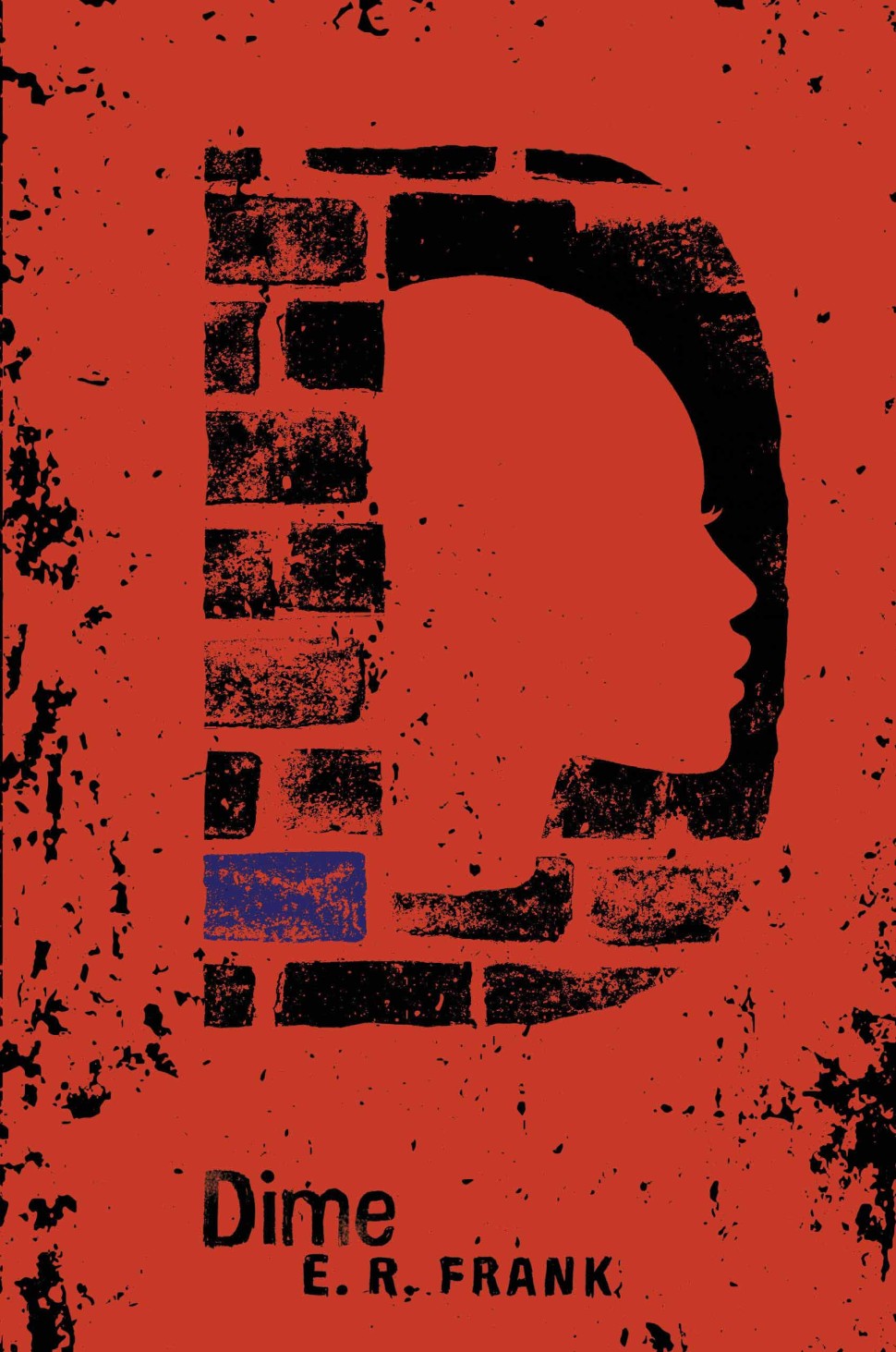
Dime has nowhere to go on a bitterly cold day when a local prostitute offers her a warm and seemingly safe haven.  Feeling she has little choice, Dime is taken in by a pimp and made to feel loved, special, and like part of the family.  Playing with literary devices like personification, Dime narrates her story by imagining the voices of characters like Greed and Sex.  Older teens looking for gritty, urban, realistic fiction will read this suspenseful tale with interest.  Frank succeeds in creating complex characters readers will empathize with and painting a nuanced, disturbing portrait of a pimp who has mastered the psychology of manipulation in order to minimize his need to use drugs and physical violence to control the young women and children he sexually exploits. --Jessica Fenster-Sparber

Click here for a discussion guide from the publisher.
Frank, E. R.  Dime.  New York: Simon and Schuster, 2015.  Print.

Wednesday, January 6, 2016

Girls Like Us by Gail Giles


Biddy’s grandmother does not want to take care of her now that the state will no longer send support checks.  Quincy’s last foster family has moved away.  The two classmates are now legally able to live independently and they have graduated from high school.  Where will they live?  How will they navigate life?  And can they get along?  Written in a vernacular much like Sapphire’s Push, and alternating between Biddy’s and Quincy’s first person perspectives, Girls Like Us offers readers two engaging voices and two different viewpoints of intellectually disabled characters. I recommend this title for more sophisticated readers who have enjoyed Push, and for girls’ book clubs.  This volume is likely to engender compassion for differently-abled peers while it explores themes of victimhood, survival, friendship, cooperation, and self-acceptance. --Jessica Fenster-Sparber

Unleashing Readers offers some discussion questions on their blog here.

Giles, Gail.  Girls Like Us.  Berryville: Candlewick Press, 2014.

Monday, January 4, 2016

If I Stay by Gayle Forman


Want an emotional ride? Gayle Forman’s book, If I Stay, is the book to read.  The reader embraces Mia and is carried along with her from the family’s car crash to the end of the book.  Mia’s being, or spirit, travels with her extended family throughout the hospital and the reader is caught up emotionally with what she is feeling and decisions she has to make.  From the very first page the reader is involved with the family.  The book is full of suspense and Gayle Forman did a tremendous job.  This is a must read for anyone who likes to be caught up in a book, emotionally, and maybe even shed a few tears. --Elaine Roberts

Forman, Gayle.  If I Stay.  New York: Penguin, 2009.  Print.

Friday, December 18, 2015

WW Encyclopedia: The Definitive Guide to World Wrestling Entertainment by Brian Shields and Kevin Sullivan


Have you ever heard of Buddy Rogers, Shawn Michaels, Hulk Hogan, or maybe John Cena?  The WW Encyclopedia serves as an archive of World Wrestling Entertainment’s various characters spanning nearly 50 years; it is, as the title states, a definitive guide not only for WWE fanatics, but those new to the sport. Entertainers and Tag Teams are cataloged alphabetically by their ring name, then further distinguished by the formatting to signify when the personalities were active. Although not every detail of each performer’s career is highlighted, their most memorable events, battles, and adversaries are noted alongside the common statistics of height, weight, land of origin, and signature move, if relevant. Breaking up the alphabetical rhythm of the encyclopedia are topics pertinent to a WWE enthusiast, such as Hall of Fame, Signs, and WWE Studios. An index located at the end makes this guide a quick reference companion while talking or viewing the WWE.--Allison Trevaskis

Shields, Brian and Sullivan, Kevin. WW Encyclopedia: The Definitive Guide to World Wrestling Entertainment. Indianapolis: DK/BradleyGAMES, 2009. Print.

Noble Warrior by Alan Sitomer


In this sequel to Caged Warrior, underground teen MMA fighter McCutcheon Daniels is now working undercover for the FBI. He opts to take down the leader of the High Priests, the gang he thought he’d left behind in Detroit, by willingly entering the city’s most notorious prison while disguised as an inmate.  Well-plotted and full of street language and extreme violence, Noble Warrior will be immediately popular with fans of Caged Warrior and readers looking for “jail books.”  Weak editing, especially at the start of the story, will lessen the appeal of this book to many ELA teachers.  Strongly recommended independent reading for older teens looking for something to sink their teeth into. --Jessica Fenster-Sparber


Sitomer, Alan. Noble Warrior. New York: Hyperion, 2015.

Thursday, December 17, 2015

Percy Jackson and the Olympians series by Rick Riordan


Rick Riordan takes the Greek myths we all grew up loving and creates a dynamic and compelling modernized setting for the melodramas to re-unfold.  Riordan’s demi-gods are all products of single-parent homes and mostly diagnosed with both dyslexia and ADHD.  These qualities, rather than bringing the characters down, are spun to be empowering.  Characters are raised by single parents because their absent parent is a god or goddess, forbidden from significant involvement in their children's lives.  The demi-god brain is hardwired for reading and writing in ancient Greek and each must be prepared for battle at a moment's notice; they aren't supposed to sit still.   When Percy Jackson, the eponymous son of Poseidon, and the other demi-gods arrive at Camp Half-Blood, Chiron, the esteemed teacher-centaur, explains it all as they train for their adventures.  In each of the 5 novels, selected demi-gods (and satyrs, and cyclopes...) go on quests in order to prevent Kronos, the fallen king of the Titans, from rising up and defeating the Olympians.--Julia Weber

Riordan, Rick. The Lightning Thief. New York: Disney-Hyperion, 2006. Print. Percy Jackson and The Olympians (Book 1).

Riordan, Rick. The Sea of Monsters. New York: Disney-Hyperion, 2007. Print. Percy Jackson and the Olympians (Book 2).

Riordan, Rick. The Titan's Curse. New York: Disney-Hyperion, 2008. Print. Percy Jackson and the Olympians (Book 3).

Riordan, Rick. The Battle of the Labyrinth. New York: Disney-Hyperion, 2009. Print. Percy Jackson and the Olympians (Book 4).

Riordan, Rick. The Last Olympian. New York: Disney-Hyperion, 2010. Print. Percy Jackson and the Olympians (Book 5).

Tuesday, December 15, 2015

Class Trip: Pedal Punk


On Thursday, December 10th, nine students from Passages Academy's Belmont site visited the New Victory Theater to take in Cirque Mechanics' Pedal Punk performance.  Students were prepared during the days leading up to the trip by lessons co-taught in the library with Erica Nadel, ELA and Special Education teacher, and with a pre-theater visit from the talented New Victory teaching artists Chad Beckim and Shela Rhoulhac.  Literacy for Incarcerated Teens generously purchased the tickets for students and staff, all of whom seemed to enjoy the experience.  Said one participant, "After the show I felt very calm and satisfied.  I felt this way because the show was so entertaining that it had me concentrated and amused." Indeed.  --Jessica Fenster-Sparber

Wednesday, December 9, 2015

Spotlight Interview: Elaine Roberts


-->

Thank you for joining us!  We are in the middle of introducing our newest team members.  Please meet Elaine Roberts who took over the school library at Crossroads this September.--Jessica Fenster-Sparber

JFS:  Can you tell us a little bit about what you were doing before you arrived at Passages' Crossroads school library?

ER:  Prior to working at Passages I worked at The Laurelton School in Laurelton, Queens.  I taught elementary classes, seventh grade ELA and was also the literacy coach.  As a coach I worked with all the grades planning curriculum and selecting books to complement the curriculum.

JFS:  What is your favorite kind of text to read?
ER:  I love reading religious or historical fiction.  I love history because it shows how society changes based on the action of the citizens.  It also shows how things may change but how our fundamental characteristics remain the same.

JFS:  What was your favorite book when you were a teenager?

ER:  Little Women by Louisa May Alcott


JFS: What is your favorite book to share with teenagers at Crossroads?

ER:  The Giver by Lois Lowry.  This book shows how following rules and doing what is expected will be noticed. This gives one the capacity to make the right decisions.

Monday, December 7, 2015

What My Father Gave Me Edited by Melanie Little


This collection of short stories is a powerful read on the theme of father-daughter relationships. Each of the seven stories features a different family dynamic used to demonstrate how said relationships evolve over the course of time and how complex they can be. From an abusive father to the perfect stepdad, each story is carefully told to show the reader how these relationships affect the daughter’s future relationships and for some their future lives. Although short (8 to 16 pages,) writers manage to convey their thoughts and feelings in a way that encourages the reader connect with the characters. Some of the stories are followed by an interview with the story’s author where she answers questions about her life and what inspired them her to write. My favorite story was by Jessica Raya. She writes about the string of stepfathers in and out of her mother’s life. In and out until the least likely one to stick around does. He sees her grow into a young woman and helps their family as a whole overcome their past challenges. This title would be a good resource for students and teachers seeking short narrative nonfiction as well as looking for alternative texts within the short stories unit.--Claudio Leon


Little, Melanie (Ed.) What My Father Gave Me. Buffalo: Annick Press, 2010. Print.

Thursday, December 3, 2015

Spotlight Interview: Allison Trevaskis


Passages Academy Libraries is pleased to introduce our new team members.  First up is Allison Trevaskis who took over the library at Bronx Hope this September.--Jessica Fenster-Sparber

JFS: Can you tell us a little bit about what you were doing before you landed in Bronx Hope's library?

AT:  This is my 8th year with Passages Academy, I have held a lot of different courses along the way such as ELA, Art, Math, Science and Health, but at heart and in practice I am a Physical Educator. 
JFS: What is your favorite kind of text to read? 
AT:  love learning a little something about every topic that impacts or interacts with my life, so I would say my favorite kind of text is Informational, second to the broader category of texts included in Health, Mind & Body.
 
JFS:  Where is your favorite place to read?
 
AT:  My ultimate reading spot is snuggled up in a thick blanket and sitting in a soft recliner.
JFS:  What was your favorite book as a teenager?
 
AT:  The book that got me really into reading as a teenager was J.D. Salinger's The Catcher in the Rye, and the book that I most enjoyed learning about how to read for details and deeper meaning and writing was The Bean Trees by Barbara Kingsolver.
 
JFS:  What is your favorite book to share with teenagers at Bronx Hope?
 
AT:  I like to connect students with books on a topic that speaks to them. I feel as though I've won the lottery when I get to know a student and they come back to say they read the entire book I recommended to them!
 
JFS:  What do you like to do for fun when you're not reading?
 
AT:  Outside of reading I spend my time with my nine month old daughter and family.

Thursday, October 15, 2015

Welcome Back!


The 2014-15 school year at Passages is now well underway.  Pardon our absence over the summer and last month while we regrouped.  We are looking forward to introducing you to our new team members in the days ahead.  We will resume reviews next week-- stay tuned! --Claudio Leon and Jessica Fenster-Sparber

Friday, June 26, 2015

Farewell


It is with heavy hearts that we will say farewell today to two of our co-editors, Anja Kennedy and Regan Schwartz.  Anja co-founded this blog in 2009, and she and Regan have worked very hard to provide leadership, editing, and reviews to What’s Good? these last five years.  We will miss them more than words can say and wish them all good things as they move on.

What’s Good?  will take a summer hiatus and we will return in September. --Claudio Leon and Jessica Fenster-Sparber

Thursday, June 25, 2015

ALA 2015


We are excited that our teammate, and fellow What’s Good? blogger, Claudio Leon, is traveling today to San Diego to accept the Association’s prestigious Spectrum Scholarship.  If you’re headed to ALA's Annual Conference, find him and say hello!--Anja Kennedy, Regan Schwartz, and Jessica Fenster-Sparber

Wednesday, June 24, 2015

Red Madness: How a Medical Mystery Changed What We Eat by Gail Jarrow


Have you ever stopped to wonder why our cereals are all fortified with niacin and other vitamins and minerals?  The answer is rooted in a mysterious disease called pellagra.  Its symptoms included: thick, painful, scaly red skin on the hands, feet, face, and chest; foul-smelling, chronic diarrhea; progressive insanity; and, finally, death.  As it ravaged the countryside, and occasionally the parlors of the rich, in the early 1900s, doctors struggled to determine its cause and to find an effective treatment.  Is it infectious?  A parasite?  A deficiency?  In Red Madness, author Gail Jarrow has woven together a vast collection of primary documents (including photographs, newspaper articles, journals, advertisements, and maps) to tell the harrowing tale of the race to cure pellagra.  Backmatter includes frequently asked questions, a glossary, timeline, author’s note, source notes, bibliography, index, and sources for further information.  --Regan Schwartz

Educator's guide available from the publisher here.

Jarrow, Gail. Red Madness: How a Medical Mystery Changed What We Eat. Honesdale, PA: Calkins Creek, 2014. Print

Tuesday, June 23, 2015

World War Hulk by Greg Pak, illustrated by John Romita Jr.


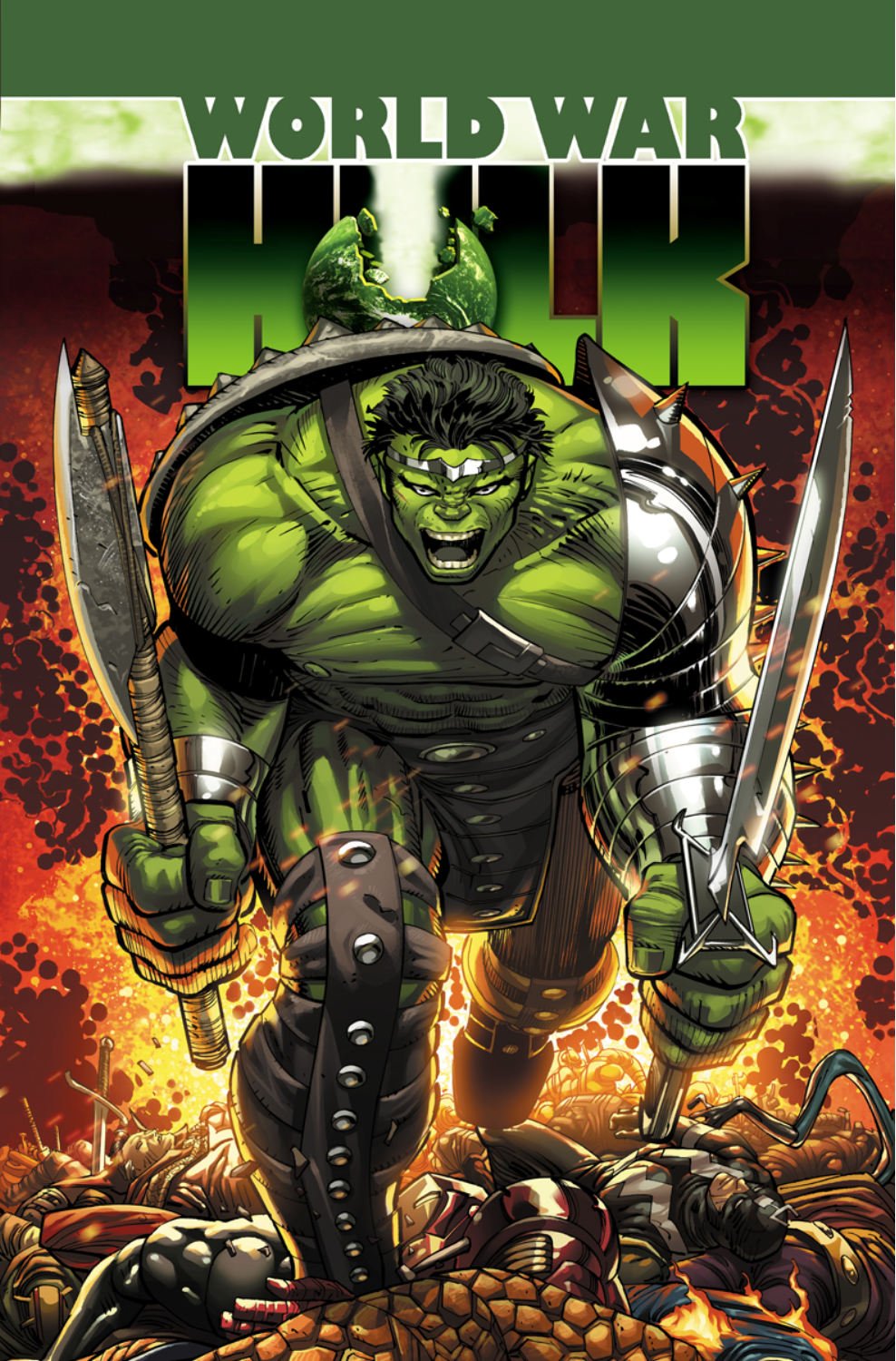
When the Illuminati (Iron Man, Namor, Mr. Fantastic, Black Bolt, Professor X and Dr. Strange) decided to send the Hulk into deep space, they had no idea of the repercussions their action would have. It was only a matter of time before the Incredible Hulk found his way back home and he’s returned with a vengeance. Shortly following the events of Planet Hulk, this direct sequel follows Bruce Banner’s return to planet Earth seeking revenge on those who deep-sixed him. The Hulk returns under the impression that the Illuminati wanted to make sure he stayed away permanently by bombing the planet where the Hulk had made his new home. Little did the perpetrators know that the Hulk would survive both his wife and son. The Illuminati become the Hulk’s primary target as he wages war on some of Earth’s most intellectual heroes. Can they survive the full might of an angry Hulk? This all-out brawl between the smartest and the toughest will keep readers on the edge of their seats until the very end. --Claudio Leon

Pak, Greg. World War Hulk. New York: Marvel Entertainment, 2014. Print.

Monday, June 22, 2015

The New Earth From Above: 365 Days by Yann Arthus-Bertrand


This rectangular pictorial seeks to bring immediate attention to the plight of the earth and its peoples through 365 fascinating and gorgeous aerial photographs of a wide variety of ecosystems around the world.  Originally presented as an international travelling photo exhibition, this dense volume shrinks the exhibition into a compact, portable portal for readers everywhere.

The New Earth is broken into twelve chapters corresponding to the twelve months of the year, and each chapter begins with a three-page essay by a different French author.  These contributors cover topics like climate change, biodiversity, renewable energy, abolishing poverty, and fair trade.  Students will be interested in seeing a garden greening a desert, olive groves, rice fields and frozen forests.  Each full-page photograph is accompanied by one paragraph of text explaining the image  and connecting it to the environmental and/or social context and threats alluded to in the visual.  The text is supplemented by a map detail with a “you are here” marker, providing geographical context, as well as the latitude and longitude address for the location.  Social Studies teachers planning lessons on map skills or preparing students for initial phases of inquiry brainstorming may find this book to be of use.  This text will likely appeal to browsers and reluctant readers.  Backmatter contains an index of countries, acknowledgements, and an overview of goodplanet.org.  --Jessica Fenster-Sparber

Arthus-Bertrand, Yann.  The New Earth From Above 365 Days.  New York: Abrams, 2009.

Friday, June 19, 2015

Magic Card Tricks by Nicholas Einhorn


I cannot begin to tell you how many times students have asked me for books about card tricks.  Magic Card Tricks features a range of tricks at different levels of ability, each with step by step instructions and full color photographs illustrating each step.  Most tricks are managed with a deck (or two) of cards, though more advanced gimmicks require materials that may not be immediately available to students.  A thorough introduction gives an overview of magic performance and a brief history of card magic that segues smoothly into a section on basic card handling techniques.  Front and back matter includes a table of contents, glossary, index, and an international list of suppliers.  While there is no substitute for learning from a pro (or from video), Magic Card Tricks is a well-organized resource which manages to pack a great deal of information into a slim, accessible volume.  --Regan Schwartz

Einhorn, Nicholas. Magic Card tricks. Leicestershire, UK: Southwater, 2012. Print.