Wednesday, October 23, 2013

Historias De Miedo: 1 by Alvin Schwartz

If you’re looking for scary stories in Spanish you’re in luck!  Historias de Miedo (Scary Stories) is filled with a wide range of short horror stories written in Spanish. No story is longer than three pages, making the book a quick read for those looking to read it cover to cover or those just looking for a quick scare fix.  The book seems a good fit for middle schoolers, because it is unlikely that any of the stories will keep students up at night; a few tales were more funny than scary.   The book is divided by chapters, each one containing a category of stories such as: ghosts, stories that will make you jump, scary stories about everyday dangers and even a funny scary stories section.  Tales are accompanied by black and white pictures that complement the story.  My favorite was a comic strip like tale told through four panels about the sea waves coming in and out of the beach called, “El Slideri-di,” which translates to “the sliding slide” or something along those lines.


At the end of the book is an annotated bibliography with details about the background of the stories and their original source. Students looking for not so serious horror stories should enjoy this book. -- Claudio Leon


Schwartz, Alvin. Historias de Miedo: 1. Editorial Everest, 1981. Print.

Tuesday, October 15, 2013

Revenge of a Not-So-Pretty Girl by Carolita Blythe


Faye and her friends break into an old woman’s apartment and rob her as this novel begins.  Disappointed and rattled, Faye returns home to her abusive mother who has anger issues, only to be haunted by the possibility that she may have accidentally caused the death of her victim. Concerned with the concept of karma, Faye revisits the scene of the crime to learn what fate she has wrought herself.  Set in the eighties in Brooklyn, reluctant teen readers will miss some of the nostalgia and humor, but more experienced readers will enjoy the ride nonetheless.  Fans of Sharon Flake and Sharon Draper will enjoy this novel which is a bit longer and relies more heavily on sarcasm and inference. However, Blythe’s writing is tightly plotted and the short chapters are well placed to create a sense of momentum and suspense as Faye’s journey through freshman year unfolds. Strongly recommended for middle school and younger high school independent reading as well as book clubs.--Jessica Fenster-Sparber


Blythe, Carolita.  Revenge of a Not-So-Pretty Girl.  New York: Delacorte Books for Young Readers, 2013.

Monday, October 7, 2013

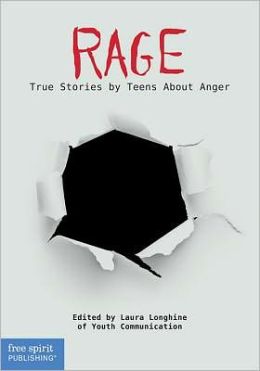
Rage: True Stories by Teens About Anger edited by Laura Longhine


Very few opening lines have more potential to grab a detainee’s attention than one that places the reader in media res while the narrator is making a guilty plea to a judge. Fred W.’s “Loose Cannon” does just that, taking the reader from the courtroom to a secure detention facility (Goshen),  and on to an outpatient drug treatment program.  Natasha Santos’ “Bum-rushed by the Past” follows with a similarly strong opening: “This is the story of a girl born in the projects, neglected by her parents, and tormented by memories of families she is no longer a part of.  It’s about how I spent six years in foster care and got adopted.”  While the collection’s diversity of perspectives may make it difficult for reluctant and developing readers to consume cover to cover, the topical themes will motivate more sophisticated readers to explore the panoply of voices in these seventeen stories.  Notably, all of the seventeen were written by teens and they are complemented by an end interview with Toni Heineman, therapist, who discusses healthy and unhealthy ways to express anger.  ELA teachers looking for personal essays as well as bridges between short stories and memoirs will want to check this out.  Social workers will want to have a copy of Rage on hand to direct students to piecemeal.  ---Jessica Fenster-Sparber

Longhine, Laura.  Rage:  True Stories by Teens About Anger.  Minneapolis:  Free Spirit Publishing, 2012.

Wednesday, October 2, 2013

Evil Behind That Door by Barbara Fradkin


Cedric is helping his high school classmate, Barry Mitchell, get his parents decrepit, old farmhouse into shape.  Problem is, Barry’s a violent guy with a history - he was sent away at the age of five because of his fits of rage - and his parents have suddenly gone missing.  Cedric is walking on eggshells around him, trying to get the work done and not set him off.  When he discovers an old locked door in the basement, Cedric is intrigued by Barry’s fear and aversion to it.  Taking a serious risk, he returns alone and pries it open.  What he finds inside calls into question everything he thinks he knows about Barry and his family.  There was a monster in the Mitchell household, but it might not have been young Barry.


Evil behind That Door is a Rapid Reads publication, intended for adult reluctant readers.  The action begins in the first few pages and the quick pace carries through to the end.  While the rural setting may be unfamiliar to urban teen readers, the mystery is compelling and suspenseful and the narrative and language are straightforward.  Readers who are ready to move beyond Goosebumps, may find Evil Behind That Door is a good choice for a creepy independent read.  Reading specialists looking for interesting new material may want to check it out, as well. --Regan Schwartz

Fradkin, Barbara. Evil Behind That Door. Victoria, Canada: Raven Books, 2012. Print.

Monday, September 30, 2013

Scars by Cheryl Rainfield


Kendra is a sexual abuse survivor who is in therapy for her trauma. As Scars begins, Kendra is beginning to believe that her abuser, whose identity she has blocked from memory, is stalking her.  She is too terrified to report the threats she is receiving, and she cuts herself to cope.  Will she find the safety and help she needs before it’s too late?  Experienced urban teen readers looking for “drama,” as well as those who request survivor stories like A Child Called It will enjoy this suspenseful novel in spite of its suburban setting.  A teaching guide provided by the author herself may appeal to book group facilitators working with teenage girls. --Jessica Fenster-Sparber

Rainfield, Cheryl.  Scars.  New York:  WestSide Books, 2011.  Print.

Wednesday, September 25, 2013

Panic by Sharon Draper


Justin is the only male dancer at the local dance studio and he loves to partner with Layla.  Layla is a beautiful, but insecure, dancer who has a hot, possessive boyfriend and is missing her dad who has been incarcerated for six years.  Mercedes is usually hanging out with Layla and Diamond when they’re not dancing.  Diamond and Mercedes drop by the mall to run an errand, and while Mercedes is making a purchase, Diamond disappears.  Was she kidnapped by the handsome man she left the building with?  Draper’s newest novel alternates between these four high school protagonists and their perspectives as Diamond’s disappearance affects their lives and their community.  Themes of online safety, stranger danger, domestic violence, and the social lives of adolescents make this title a strong pick for a girls’ book club (8th grade and up).  Former English teacher Draper thoughtfully provides discussion questions and possible essay assignments on her website.  --Jessica Fenster-Sparber


Draper, Sharon.  Panic.  New York: Atheneum, 2013.  Print.

Tuesday, September 24, 2013

In Darkness by Nick Lake


While recovering from a gunshot wound, fifteen-year-old Shorty becomes buried underneath the hospital when the 2010 earthquake strikes Haiti.  Trapped in complete darkness, no one can hear his screams except for those lying dead beside him and the rats.  Now awaiting help or death, Shorty recounts the events that landed him in the hospital, his mother’s political involvement in the Aristide movement, his sister’s kidnapping, and his involvement in the pro-Aristide gang, or chimére.  Shorty and Toussaint L’Ouverture, famed hero of the Haitian Revolution, each “possess” each others’ dreams, alternating points of view throughout the novel.  Folk history claims that L’Ouverture was possessed by the war god Ogun during a Voudou ceremony, establishing his leadership in the rebellion; however, Lake writes an alternate version in which Shorty possesses L’Ouverture.  Other liberties with history and religious imagery are taken, which Katie Orenstein writes about in her New York Times review.  Shorty’s immersion in gang culture and its close ties with Haiti’s political stability reminded this reader of the documentary Ghosts of Cité Soleil.  Students interested in books about gangs may enjoy this 2012 Printz winner.  Teachers may appreciate Bloomsbury’s reading guide for discussion questions and background information. -Anne Lotito-Schuh


Lake, Nick. In Darkness. London: Bloomsbury, 2012. Print.

Monday, September 23, 2013

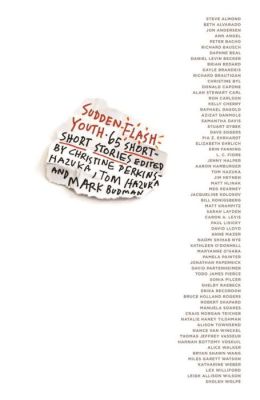
Sudden Flash Youth: 65 Short Short Stories Edited by Christine Perkins Hazuka, Tom Hazuka, and Mark Budman


In need of a short story? An extremely short story?  Check out Sudden Flash Youth.  65 short short stories—none of them longer than four pages— is a worthwhile place to start looking for the shortest fiction that is closer to the “highly sophisticated” end of the text complexity spectrum.  Readers with a preference for an urban voice can go straight to “A Whole Other,” which deftly reveals the differences between what we think and what we say and do.  Those who enjoy the Twist anthologies can  check out “Little Brother ™,” by Bruce Holland Rogers.  Readers in search of  literary experiments may enjoy Voskuil’s eerie “Currents.”  Coming of age themes abound, notably relevant for LGBTQ youth in Konigsberg’s “After” and Soares’ “Haircut.”   Other noteworthy shorts include Hazuka’s “Homeward Bound,” and Dagolds’ fable “The Two Rats and the BB Gun.” Strongly recommended for English Language Arts teachers seeking a fresh crop of very short stories to share with their students. –Jessica Fenster-Sparber

Perkins-Hazuka, Christine, Tom Hazuka and Mark Budman.  Sudden Flash Youth:  65 Short Short Stories.  New York: Persea Books, 2011.  Print.


Click here to view the table of contents and read “Currents.”  Click here to view the publisher’s lesson plan for “Currents.”

Friday, September 20, 2013

When We Wuz Famous by Greg Takoudes


Rarely does an indie film become novelized by its director, but such is the unusual case with Takoudes’ When We Wuz Famous.  As the novel begins, Vincent, one of six friends in New York City who make up the Kaos Krew, has been shot and killed.  Reignbow, his best friend’s girl, is in an interrogation room in East Harlem with Detective Keating and not making it easy on the detective.  The reader is forced to wonder at why Reignbow is under interrogation after Vincent’s death.  Unexpectedly, however, the story mostly centers on Francisco, Vincent’s best friend and Reign’s boyfriend, who has been recruited out of his neighborhood and into an elite boarding school hours away from the city.   A YA novel for developing urban fiction readers who have already read Street Pharm and Monster, and not yet ready for a common core text exemplar. --Jessica Fenster-Sparber


Takoudes, Greg.  When We Wuz Famous.  New York:  Henry Holt and Company, 2013.

Educators and book club facilitators may want to check out the publisher's discussion guide here.

Thursday, September 19, 2013

Bad Boy by Dream Jordan


Kate is at a new group home where she has to once again prove to her housemates that she is not someone they can walk all over.  But after coming so far, and learning that not every conflict should be resolved with a fist fight, Kate wants to navigate the situation a little differently.  Unfortunately her new housemates are not giving her much of a choice.  Feeling isolated and lonely, Kate finds refuge in Percy; he’s hot, he’s cool and has plenty of money.  But Percy isn’t all like he seems.  Kate soon finds herself in a spiraling-out-of-control abusive relationship.  Bad Boy by Dream Jordan talks about a  mature topic and, through Kate, sends a very powerful message, “Nobody is immune from abuse.  Tough girls, rich girls, white girls, black girls… even grown women get abused… anybody can fall prey.”

Although this book may be accessible to middle school readers, the topic seems better suited for a teen audience. The pacing of the book is a little fast but it is a great way to engage teens in thinking and talking about dating violence. This book would be strengthened by a resource list for teens seeking more information in dealing with abusive relationships. Students who enjoyed Hot Girl, Such a Pretty Girl and nearly anything by Ni-Ni Simone should enjoy Bad Boy.--Claudio Leon


Jordan, Dream.  Bad Boy. New York: St. Martin’s Press, 2012. Print

Wednesday, September 18, 2013

Stories from Latin America by Genevieve Barlow


This slim bilingual volume of sixteen folktales and legends spans thousands of years and ten countries.  From Columbia’s “Poor Fool!” - the story of haughty Don Ramiro’s amusing comeuppance - to Venezuela’s “The Empty Boat” - the tale of a man’s moral transformation - each story is written simply and elegantly, in language accessible to second language learners and developing readers.  The Spanish and English versions are presented side by side for easy back and forth comprehension checks and back matter includes thorough translated vocabulary lists.  Stories from Latin America also includes a map of Latin America and directions to accessing free MP3 audio recordings of four selected stories in Spanish. --Regan Schwartz

Barlow, Genevieve. Stories from Latin America. New York: McGraw-Hill, 2010. Print.


Tuesday, September 17, 2013

Whatcha Mean, What’s a Zine?: The Art of Making Zines and Minicomics, by Mark Todd and Esther Watson Pearl


Looking for a unique and engaging way for your students to publish their work?  Offering a brief history of zines as well as step-by-step how-to instructions, Whatcha Mean, What’s a Zine? is the perfect volume for teachers interested in leading a zine-making project.  The entire zine-making process is broken down into easily digestible bites, with great potential for application to individual lesson plans.  From brainstorming a topic to write about to distribution methods, each section serves as an example of zine design and layout.  Noteworthy are the photocopier tricks and tips for getting a wow factor from a low budget production method.--Anne Lotito Schuh


Todd, Mark, and Esther Watson Pearl. Whatcha Mean, What’s a Zine?: The Art of Making Zines and Minicomics. Boston: Graphia, 2006. Print.


Monday, September 16, 2013

The 411 on Bullying, Gangs, Drugs and Jail: The Formula for Staying in School and Out of Jail by Warden Howard Robertson


This slim volume may be worth taking extra steps to get into the hands of young men facing a hard road when early death or a lifetime of incarceration look like the inevitable possibilities.  Striking a wizened, knowing, tone, retired Warden Robertson has written the missing self-help book for developing readers who are urban tween and teen boys.  Like Williams’ Life in Prison, The 411 seeks to de-mystify and de-glamorize the end results of “selling drugs, banging, gambling and hustling”  and dropping out.  While phrases like “That’s a fact, Jack.” may not immediately endear young readers to the sometimes avuncular narrative, pictures of the inside of jails on Rikers’, along with images of the author and his family in front of fancy cars will draw curious readers to the author’s words.  The images are grainy, and the cover design and layout feel amateurish.  However, the production value lends this book a visible air of street cred.  Between the covers, Howard quickly establishes his own claims to insight and insider status:  20 years of service and leadership on Rikers, an older brother in and out of they system, and another older brother dead of a drug overdose at 16.  Counselors may find the frank discussion of goals, social groups and gangs a useful starting point for group conversations.  Students may just hang on to this book for independent reading. Reading specialists will want to keep several copies on hand.  —Jessica Fenster-Sparber
Robertson, Warden Howard.  The 411 on Bullying, Gangs, Drugs and Jail:  The Formula for Staying in School and Out of Jail.  Denver: Outskirts Press, 2013.  Print.

Thursday, September 12, 2013

Partly Cloudy: Poems of Love and Longing by Gary Soto


From the author of The Afterlife and Novio Boy, comes this small book of love poems written in the voices of teens.  The first half of Partly Cloudy is verse from a female perspective, including “Black Books,” about a young woman’s search for Mr. Not a Jerk, and “Obsession” which ends with the line, “Young lady, there’s a picture of a boy at the back of your retinas.”  In the second half, Soto explores young love from the male point of view.  In “Beautiful Trouble” a deacon’s son yearns for a red-lipped, bangle-clad bad girl.  “Driftwood” is a sad lament of rejection that makes poetry out of a frozen river.  The poetry is accessible and captures the vulnerability of eager young hearts, without conjuring up fiery passion or utter heartbreak.  Partly Cloudy is a good introduction to poetry for younger teens and tweens and well-suited to instructional use. --Regan Schwartz

Soto, Gary. Partly Cloudy: Poems of Love and Longing. New York: Houghton Mifflin Harcourt, 2009. Print.

Monday, September 9, 2013

Welcome back + a Fabulous List


Welcome back!  

And to those of you who never went away, it’s nice to see you again.  Today is the first day of our students’ new school year and we are excited to tell you about the books we’ve been reading.  Before we get started, though, we’d like to share with you a list we’ve all been waiting for:  Andrea Swenson’s recommended titles for NYC LGBTQ youth and their allies.  Andrea recently shared on our NYC listserv that she created this list in conjunction with a Collaborative Collection Development Grant she received for books related to and for the LGBTQ students and allies in our communities.  In her own words:

My lists have some very specific goals:  they are meant to go in NYC urban public school libraries; they are meant to be appealing to as many students as possible students, GLBTQ or allies; they need to fit a wide range of reading levels; and they need to be easily purchased from a library vendor.  I will be leaving off some award-winners, either to provide diversity of characters, or because I don’t think they’re as appealing as some other books.  I reached out to experts around the country and in New York City for advice & suggestions.  I know that making lists is always challenging, so I don’t expect to please everyone!”  

If you don’t know Andrea, please allow me to tell you that her school library is a true sanctuary for LGBTQ youth; a beacon and model for the rest of us.  Without further ado, here it is!
--Jessica Fenster-Sparber


Wednesday, August 7, 2013

Big Guys Don’t Shrink: Basketball’s Best Quotes & Quips by Eric Zweig


“These young guys are playing checkers.  I’m out there playing chess.” - Kobe Bryant


This collection of deep thoughts, sarcastic quips, brags, and ponderings from some of basketball’s biggest personalities is full of attitude, humor, and, at times, wisdom.  Big Guys Don’t Shrink is a stylish book, making good use of typography and white space, including eye-catching punches of color, and with full page color photos sprinkled generously throughout.  Including over 400 quotes, this low-stress read is popular with sports fans and offers a unique look at the sport over the last few decades.  Organized thematically, the table of contents includes sections such as, “Foul Play,” “Gettin Old,” “Snappy Answers,“ and “Weakest Link.”  Looking for a quote from a specific player?  No problem - they are indexed by player name. --Regan Schwartz

Zweig, Eric. Big Guys Don’t Shrink: Basketball’s Best Quotes & Quips. Buffalo, NY: Firefly Books, 2008. Print.

Friday, July 26, 2013

My Book of Life by Angel by Martine Leavitt


Angel’s been running away from home ever since her mom died, but she usually only goes so far as the mall before she returns home or the police pick her up for shoplifting.  After Angel is seduced by an ambitious pimp who feeds her addictive drugs, Angel’s distraught father makes the grave mistake of telling Angel not to come home until she cleans up her act.  Call, a pimp remarkable for his intent to lead a grassroots effort to legalize prostitution, seizes the the opportunity to take over Angel’s life and move her into downtown Vancouver. Initially terrorized by Call, Angel eventually becomes preoccupied with protecting a younger girl from the life Call has given her and fighting the attendant drug addiction.  Told in haunting verse, the end of the book roots Leavitt’s fiction in the real-life disappearances of forty-nine women.  School librarians will want to know that the depiction of minors sexually abused by adults makes this book appropriate for more emotionally mature audiences.--Jessica Fenster-Sparber


Macmillian offers a discussion guide here.  Click here to read School Library Journal’s interview with author Martine Leavitt.

Leavitt, Martine.  My Book of Life by Angel.  New York:  Farrar, Straus, Giroux, 2012. 

Thursday, June 27, 2013

ALA 2013

Two of us, Claudio and Regan, are presenting at the American Library Association's annual conference in Chicago this Saturday.  The topic? Arts programs in school libraries serving detained youth.  If you are attending, find us and say hello!

In other news, yesterday marked the end of the Passages Academy school year.  Posting here will slow down over the summer as we prepare for another great school year.

Monday, June 17, 2013

The Boy in the Striped Pajamas: a fable by John Boyne


The Fury has come for dinner and decided Bruno’s father is destined for greatness, so the family is moving to Out-with.  Told from the perspective of nine-year old Bruno, Boyne’s tale is a brilliantly written short novel which offers an engaging counterpoint or supplement to the textbook teachings on the Holocaust for middle and high school students.  While most fiction for adolescents features an adolescent protagonist, The Boy in the Striped Pajamas requires a more sophisticated reader to appreciate the clever wordplay referring to Hitler and Auschwitz.   Readers of all ages stand to benefit from the discussions the book will be sure to inspire, including the importance of questioning one’s surroundings, following a moral compass, and genocide.  The ending packs a quiet punch--wait to see the movie if you can.  Originally published in 2006, back matter in the 2011 edition includes eight discussion questions from Pat Scales and an interview with the author.  --Jessica Fenster-Sparber


Oxford University Press has published an 88-page teacher guide written by Hayley Davies-Edwards.  You can get it for free here.

Boyne, John.  The Boy in the Striped Pajamas: a fable.  New York: Random House, 2011.  Print.

Friday, June 14, 2013

Jokelopedia compiled by Ilana Weitzman, Eva Blank, Alison Benjamin, and Rosanne Green


Nothing brings people together like a joke so silly that it just cracks you up.  Luckily, Jokelopedia is chock full of them.


“Why was the margarine unhappy when she gave birth to marmalade?
She was expecting something butter”
“What did the 0 say to the 8?
Nice belt.”
“What’s the fastest way to crash a computer?
Let an adult use it.”


Now, I admit, that last one hit a little too close for this librarian’s comfort, but it is the wealth of jokes like these that pulls groups of disparate teens together for shared reading, laughing, and groaning.  Interspersed with the one-liners are pages of comedy history, comedy biographies, step-by-step procedures for a multitude of practical jokes, ample cartoons and illustrations, and longer-form narrative jokes.  Jokelopedia is an engaging, low-stress read, sure to elicit a smile (or an amused grimace). --Regan Schwartz

Weitzman, Ilana, et al, eds. Jokelopedia. New York: Workman Publishing, 2006. Print.