Wednesday, March 16, 2011

Ripley's Believe It or Not: Enter if You Dare

Conjoined crocodile twins, a 22-inch tall man, a faceless cat, a woman with an elephant trunk nose, a man with tattooed eyeballs: what do they all have in common? They can all be found in Ripley’s Believe it or Not: Enter if You Dare. All of the Ripley’s books are a huge hit with our students who are drawn in by the eye-popping full-color photos of strange-but-true oddities from around the world. The series is perfect for shared reading because the reader can’t help but express their reactions vocally, turning to their neighbor to ensure he or she is equally shocked and amazed. Our most reluctant readers are highly motivated to read the brief captions accompanying each photo by a desire to learn more about just what it is they are looking at. Available in hard cover only, teachers are encouraged to borrow Ripley's books for classroom use.

Barratt, Judy and Sandy McFall, Eds. Ripley’s Believe It or Not: Enter if You Dare. Orlando, FL: Ripley Publishing, 2010.

Tuesday, March 15, 2011

Yo’ Mama is So... by Hugh Payne


Hugh Payne wants you to know he has nothing against yo mama. He hopes she has a sense of humor. This little 256 page joke book averages four one-liners per page and is a perfect stress-free read for the reader who likes his white space riddled with laughs. My favorite part of this volume are the insults between famous people, like Golda Meir on Moshe Dayan : “Don’t be so humble, Moshe, you’re not that great” (p154). I can only hope that the student reader already knows who Meir and Dayan are, and if she doesn’t that this will lead to some wondering and research. Other sections educators can appreciate include the “Insults, courtesy of William Shakespeare” (p 209), a wonderful introduction to the Bard if there ever was one for Passages’ students about to dive into encountering Shakespearean English. Teachers will also and the epilogue, in which the author exhorts the reader to apologize when appropriate.

Wednesday, March 9, 2011

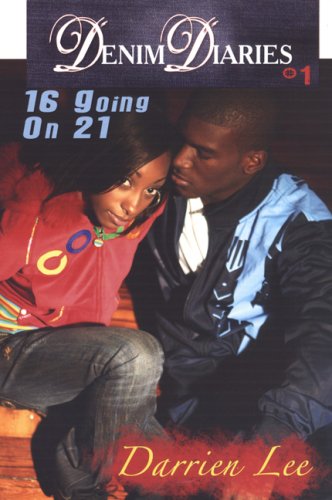
Denim Diaries 1: 16 Going on 21, by Darrien Lee

Good Girl falls for Bad Boy. Good Girl sneaks out of house, despite her mother’s warning, to attend Bad Boy’s party. Shots ring out, and the couple flees only to find blood on Good Girl’s shirt once they stop running. This is the scene presented to readers in the first few pages of Darrien Lee’s 16 Going on 21, the first volume in the “Denim Diaries” series. The Good Girl/Bad Boy construct becomes complicated as we learn more about both Denim and Andre’s back stories. Students looking for a romance high in drama will be drawn to the theatrical dialogue between Denim and Andre. Moralistic in tone throughout, the ending is left unresolved, creating a desire in the reader for the next book in the series.

Lee, Darrien. Denim Diaries 1: 16 Going on 21. West Babylon, NY: Urban Renaissance, 2009.

Monday, March 7, 2011

Played by Dana Davidson


Looking for a love story? This is a really good one with a twist. Ian is attractive and popular, and he considers himself a real player with the ladies. When he is challenged by the leader of the coolest crew in school (the very crew he is proud to be a member of) to get a very uncool girl to sleep with him and fall in love with him, he knows he has to play the game if he wants to keep the respect of his friends. As cruel as this premise sounds, at heart, Ian is not a terrible person, and he feels the guilt of his motions every step of the way as he puts the moves on unsuspecting, plain and brainy Kylie. As their “relationship” develops, Ian begins to see that Kylie is more than she appears and readers will root for him to do the right thing as he struggles to continue with his friends’ dare while his feelings become real. This is an uplifting story for anyone who has ever been played and a good lesson for the players.

Davidson, Dana. Played. New York: Hyperion, 2005.

Friday, March 4, 2011

Skulls by Noah Scalin


Spaghetti skull, acorn skull, mountain skull. Soy sauce skull, wire frame skull, seashell skull. How many different materials do you think you could use to illustrate one subject every day for an entire year? Artist Noah Scalin took on this project in the form of skulls, with an image posted once a day to his blog. After the blog gained massive public interest, a book was published showcasing 180 of the skulls Scalin created for the project, including short captions that describe the materials used in the process. This book is super accessible -- it’s visually appealing because of its small, square size, and every page features a skull or some skulls made in a multitude of media. Students can usually appreciate the absurdity in some, and the skill in others, but they will almost always give it a chance. This is a highly recommended stress free read.

And the blog lives on as fans all over the world continue to submit found skulls and their own handmade skulls. Check it out: www.skulladay.com

Scalin, Noah. Skulls. New York: Sterling Publishing, 2008.

Wednesday, March 2, 2011

Weird but True! 300 Outrageous Facts by National Geographic


What is bellybutton lint made out of? How many people holding hands would it take to encircle the equator? How much can a cloud weigh? In varied fonts and with a combination of digitally created illustrations and photographs, Weird but True delivers the answers to 300 questions you probably never actually asked but will find fascinating anyway. A few may leave you scratching your head like I was when I read “Some sand dunes bark” on page 171 or nodding your head in acknowledegement again, as I was, when I read “If you eat too many carrots your skin can turn orange” (pg 180)-- a harmless experiment you can try with a 6 month old baby. But most will leave the reader with a furrowed brow wondering away: “Human ears evolved from ancient fish gills” (pg 188). A handy index makes your favorite facts findable when you want to prove you’re not making something up, like “99% of people can’t lick their elbows” (pg 199) or “The year 2020 is the next time you’ll see a full moon on Halloween.” (pg 193).

National Geographic. Weird by True! 300 Outrageous Facts. New York: National Geographic Society, 2010.

Tuesday, March 1, 2011

Black and White by Paul Volponi


Marcus and Eddie don’t care about their mis-matched skin color: Marcus is black and Eddie is white. As best friends and co-stars of their high school’s basketball team, they only care about looking out for each other -- both on and off the court -- and they’ve got it all under control. So when they need a little extra cash to go on a school trip, they’re certain that they’re smart enough and smooth enough to get away with some quick and painless robberies. When one of the robberies goes terribly wrong and a community member, a judge who is “tough on crime” as luck would have it, gets injured, Marcus and Eddie are left to figure out a lot of things that had at one time seemed so simple. This book moves quickly in alternating chapters narrated by Marcus and Eddie and is full of thought provoking material. Marcus and Eddie never let their skin color define them before, but how are they supposed to feel now as their victims, the police, their team, and their once close families begin to do just that?

Volponi, Paul. Black and White. New York: Penguin SPEAK, 2005.

Monday, February 28, 2011

Anne Frank: Her Life in Words and Pictures, by Menno Metselaar and Ruud van der Rol


As many as one million people walk through the Anne Frank House, the museum that was once the Secret Annex that hid Anne Frank and her family, each year. In lieu of a field trip to this historic site, this book offers readers a visual visit to the museum. With an abundance of full color photographs of the famous diary as well as personal family photos of the Frank family and the Secret Annex, a summary of Anne’s diary contextualized in the contemporary political climate is punctuated by excerpts from the diary that add a personal voice to the retelling. Passages’ students have expressed a great deal of curiosity about the Holocaust, and on more than one occasion about Anne Frank specifically. Maybe it is the shockingly horrific nature of genocide, or a shared sense of persecution and imprisonment. Whatever it may be, this book has answered and raised many questions for students exploring it during their time in the library.

Metselaar, Menno and Ruud van der Rol. Anne Frank: Her Life in Words and Pictures. New York: Roaring Brook Press, 2004.

Thursday, February 17, 2011

101 Freaky Animals by Melvin and Gilda Berger


If you’ve never heard of babirusas, pangolins, okapis, narwhals, or cassowaries, you’ll want to look at this book. If you’ve never seen a flannel moth caterpillar, or a giant clam, or a hooded seal, or a red-lipped batfish, you’ll want to look at this book. Each page in this full-color paperback features a headline which includes the name of an animal and an interesting tidbit like “Sea Cucumbers Shoot Out Their Insides” (#79), or “Temminck’s Tragopans Inflate their Horns” (#95), accompanied by approximately five sentences in a fairly large font. The information, organized alphabetically by the animals’ names, varies and sometimes elaborates on the headline and sometimes gives additional interesting facts. The brevity of these paragraphs makes this book a great starting point for inquiry projects or discussions about questions and questioning strategies. This is a great pick for reluctant readers who are scoring around a fourth grade reading level on the STAR exam but aren’t interested in fiction.

Berger, Melvin & Glinda. 101 Freaky Animals. New York: Scholastic, 2010.

Tuesday, February 15, 2011

Guest Post: The Real Cost of Prison Comix, edited by Lois Ahrens with Comix by Kevin Pyle, Sabrina Jones and Susan Willmarth

Those who work at Passages Academy have shown themselves to be at the intersection between education and incarceration. In Teach Like A Champion, Doug Lemov suggests that the best way to teach students is to get to know them as individuals. One way to achieve this at Passages is to truly understand our students’ circumstances as court-involved learners.

The Real Cost of Prison Comix provides detailed information about the prison industrial complex, navigating this complex and how it relates to both teachers and students at our Passages school sites. The Real Cost of Prison Comix’ anecdotal and statistical information presented in graphic novel form also proved useful in the classroom as it engaged both emerging readers and those with deeper levels of comprehension. The book’s illustrations simplified sophisticated concepts, and thus made them more accessible.

Exploring the malevolence of the “school to prison pipeline” and its effects on families’ and communities’ health and fiscal well being, the book is one of the more transformational texts used in Passages Academy classrooms. The students are inspired to see their reality validated in print as they begin to consider how they can make changes to their lives and communities.

The Real Cost of Prison Comix is a rare piece of literature that can simultaneously both inform our craft and excite our students. - L.A. Gabay

Ahrens, Lois, Ed. The Real Cost of Prison Comix. Oakland, Ca: PM Press, 2008.

L.A. Gabay is a doctoral candidate in the Urban Education Program at the CUNY Graduate Center in New York. His published works can be found in “Teaching City Kids: Understanding and Appreciating Them” (2006), “The Praeger Handbook of Education and Psychology” (2007), “KICKS Magazine” (2009) and Sages’ “Cultural Studies ↔ Critical Methodologies” (2010).

Friday, February 11, 2011

Crush: Love Poems by Kwame Alexander

With Valentine’s Day on the horizon, many students have been looking for love poems to read and to share with their sweethearts. Alexander’s collection of love poems is a quick read with a little something for everyone. A few poems are about longing, a few are about heartbreak, and some are about mutual love. One of my favorites is “Awkward Poems,” a poem about having a crush on a friend: “Sometimes I wish we weren’t friends / then I could gaze into your bold eyes / and find answers to questions I’m afraid to ask.” A nice feature at the end of the book is the inclusion of poems by five poets Alexander admires, confirming that poetry is meant to be shared. Looking for more love poetry to recommend to students? See our earlier review of Love Poems by Pablo Neruda or ask us to show you more in the poetry section of our libraries.

Alexander, Kwame. Crush: Love Poems. Alexandria, VA: Word of Mouth Books, 2007.

Thursday, February 10, 2011

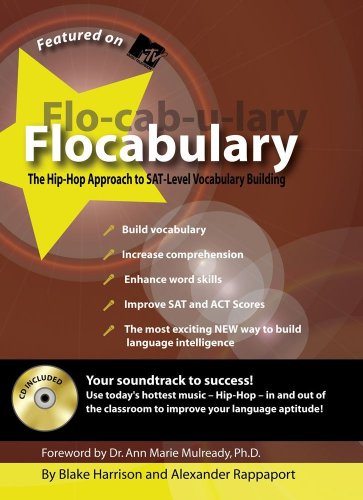
Flocabulary: The Hip Hop Approach to SAT-Level Vocabulary Building by Blake Harrison and Alexander Rappaport


An SAT prep book might sound like a hard sell to students seeking independent reading material, but Harrison and Rappaport’s efforts will not be wasted on any teen interested in improving his or her vocabulary. While the beginning of the book explains the technique, readers can dive right into the songs in chapter 2 and start improving their lexical stylings immediately. Each song is prefaced by a wordbank which lists all notable vocabulary words contained in the song. The list is followed by the song lyrics which run down the left side of the page while the right side offers extremely brief definitions line-by-line along with identifying the part of speech the term most commonly appears as. Oxford English Dictionary it’s not, but Flocabulary offers students more than etymologies. There’s synonym matching, sentence completion, and reading comprehension exercises following each original lyric. Will your students undertake these with no assignment or grade hanging over their head? Many will-- and even without the musical CD that accompanies the books-- because who doesn’t want to rhyme fiercely and out-metaphor Lil’ Wayne on the hall? For readers with CD player access, the CD can be the treasure because the rhythm, rhyme and music allow the listener to memorize the new vocabulary words almost effortlessly, the way one memorizes the lyrics to one’s favorite song.

Chapter 3 offers brief analyses of the songs-- best suited for ELA teachers and their ilk, Chapter 4 lists hip-hop resources. Chapter 5 provides answer keys to the 11 songs and Chapter 6 is a quick reference dictionary of the approximately 500 SAT words contained in the lyrics. The book’s website offers even more for the educator.

Harrison, Blake, and Alexander Rappaport. Flocabulary: The Hip-Hop Approach to SAT-Level Vocabulary Building. Kennebunkport: Cider Mill Press, 2006.

Wednesday, February 9, 2011

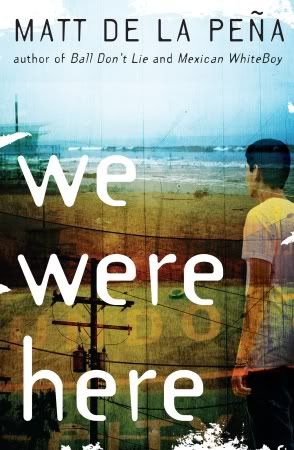
Guest Blog Post: We Were Here by Matt de la Pena


I know Miguel Castaῆeda. He went to my high school. I know Rondell Law. He’s been my student. Mong…well, he tends to be inconspicuous, but you’ve seen him around. Actually, you’ve known all of them at some point in your life. We never knew their stories, cause they never really talked about them, but we know them now. They’re the subject of Matt de la Peῆa’s book, We Were Here. In the form of a journal, Miguel narrates the layered stories these three young men share. The three first meet at a group home in central California where they will complete their sentences…at least in theory. Not a month into his time, Miguel takes Mong up on his offer to escape, and Rondell tags along. The three head for Mexico, largely on foot, and dramatics ensue. While still at the group home, The Lighthouse, Miguel had decided to take up reading, and, in preparation for his journey, swipes a handful of novels from the home library, as well as his, Rondell’s, and Mong’s official files. As the story unfolds, stories unfold for Miguel, too . He takes us through The Color Purple, Of Mice and Men, and The Catcher in the Rye. He identifies with various aspects of character or plot, engaging the reader in these auxiliary texts, we well. We also learn Mong's and Rondell's stories, both familial and judicial, and fall in love with each one. Eventually, as the reader earns his trust, Miguel tells us his story, which he tip-toes around for most of the book. Though they don’t end up in Mexico, all three boys meet with success, as does de la Pena in his novel. He kept me reading for some 300 pages, and even encouraged me to give The Catcher in the Rye another shot. --Julia Weber

Guest blogger Julia Weber is an English teacher at Passages Academy's Boys Town site.

Monday, February 7, 2011

I Can’t Keep My Own Secrets: Six-Word Memoirs by Teens Famous + Obscure, edited by Smith Magazine


The six-word memoir phenomenon is rumored to have begun when Ernest Hemingway was asked to write a story in only six words. He wrote, “For sale: baby shoes, never worn.” Outstanding six-word memoirs are those that force the reader to imagine the depth of the tale that inspired them. One example submitted to Smith Magazine’s website was, “Cursed with cancer. Blessed with friends,” which you may imagine evokes the image of an elderly person reflecting at the end of a long life, but was in fact written by a nine-year-old girl. Or, “I still make coffee for two,” which conjures an image of someone mourning the loss of a beloved spouse, but was actually written by a man in his twenties after a breakup. In this volume, Smith Magazine has collected 600 six-word memoirs solely by authors between the ages of 13 and 19. Students find some memoirs, like “Always listening, but never really heard,” easy to identify with. While others, like “My mom had my boyfriend deported,” ignite as many possible story lines as there are students in the room. Share these with your students, and more from Six-Word Memoirs on Love & Heartbreak by Writers Famous & Obscure and Not Quite What I was Planning: Six-Word Memoirs by Writers Famous & Obscure, and then ask them to pen their own six-word memoirs. Justin, age 15, a student at Crossroads, wrote, “Shoulda, woulda, but can not handle,” and, “Right now, no freedom, but faith.” What six words would you choose?

Smith Magazine, Ed. I Can’t Keep My Own Secrets: Six-Word Memoirs by Teens Famous + Obscure. New York: HarperTeen, 2009.

Friday, February 4, 2011

Pitch Black: Dont be Skerd by Youme Landowne and Anthony Horton

“I was born to people who didn’t want me. So they gave me away. But I guess the people they gave me to didn’t want me either. No one wanted me. That’s how I ended up on the streets alone and uneducated.” This is how Anthony Horton begins to tell Youme Landowne the story of how he made a home for himself in NYC’s subway tunnels. As storyteller, Anthony invites Youme down into his home in this black and white graphic novel. Letting the artwork tell much of the tale, the sparse text focuses on the lessons Anthony learned and the family he found underground. Students are drawn to this book because it is a true story, verifying the oft-rumored reality of NYC’s homeless living underground. A Brooklyn Eagle interview with Landowne works as a great supplemental text that addresses how these two artists collaborated. Highly recommended for readers of all levels looking for a quick and engaging read.

Landowne, Youme and Anthony Horton. Pitch Black: Don’t Be Skerd. El Paso, Texas: Cinco Punto Press, 2008.


Wednesday, February 2, 2011

If I Was Your Girl by Ni-Ni Simone


Toi and Shanice have one thing in common: Quamir is their babies’ father. He treats them both like dirt, but even though Toi can see that he’s not a great guy, really not even an okay guy, she can’t help but want the relationship to work. That is, until she meets Harlem. For the first time in her young life, she’s swept off her feet by a guy who treats her like a lady, including long conversations and Chinese food deliveries to her door. But how will Harlem react when he finds out she has a baby? While the story is often predictable, and the dialogue can be trite, students looking for an urban, “real-life,” book will be happy to find this on the shelf. Written for teens and with plenty of slang and drama, it is Toi’s character development that sets this story apart from others in the genre. Teens who can relate to Toi’s challenges appreciate the courage she demonstrates at the close of the story.

Simone, Ni-Ni. If I Was Your Girl. New York: Dafina Books, 2008.

Monday, January 31, 2011

Creature by Andrew Zuckerman


I dare you to look at each and every photograph in this coffee-table sized book by Zuckerman and not want to start an inquiry project. I dare you to look at the first few simian portraits and put it down. I dare you not to be full of wonder and not to marvel at the animals contained beneath the white linen covers. The blue tongued skink, the African lion, the tokay gecko, the cat. Certainly the cat. The beauty, the complexity, and the varieties of existence on the planet we call home cannot help but persuade the peruser to keep turning the pages. The pages are wordless, and the collection of portraits is supplemented by a photo index with classification data at the back (science teachers take note!). While the heft and format of this book makes it unsuitable for circulation in our environments, it is the perfect open book display, the essential call to inquiry for a co-taught unit on animals, and a stress-free read for anyone who walks into the library.

Zuckerman, Andrew. Creature. San Francisco: Chronicle Books, 2007.

Sunday, January 30, 2011

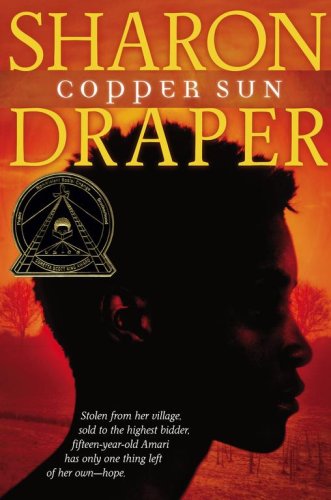
Copper Sun by Sharon Draper

After watching her entire family murdered, fifteen-year-old Amari’s idyllic life becomes a living nightmare as she is forced to march to the coast in irons and travels the Middle Passage to face a lifetime of slavery in the Carolinas. Will she ever see her love again? Will her plan to escape to the South really work? Draper’s work of historical fiction alternates perspective from Amari to Polly, a fifteen-year-old white indentured servant whose responsibility it is to train Amari in the duties and conduct of a slave. The girls’ relationship blossoms into a friendship as each discovers surprising similarities in their plights and histories, despite their preconceived notions of each other. This compelling read would naturally supplement any unit on the Middle Passage, slavery in America, and colonialism in America as Draper includes historical information on Fort Mose, a Spanish colony that guaranteed freedom to any escaped slave. Partner Copper Sun with The Middle Passage by Tom Feelings, which can also be found in your library.

Draper, Sharon. Copper Sun. New York: Simon Pulse, 2006.

Wednesday, January 26, 2011

Trickster: Native American Tales: A Graphic Collection edited by Matt Dembicki


Sneaky, mischievous animals characterize the twenty-one Native American trickster tales in this compact collection. While this book will probably not appeal to students who are looking for graphic novels in general, it is certainly valuable as a teaching tool. Editor and artist Dembicki put together teams of storytellers and artists, a process he explains in a note to readers, and Native American storytellers make the tales authentic. This is a good thing, but it also means the writing may seem stilted, abrupt, and strange to students unfamiliar with the vernacular. Which brings me back to mentioning the value of this resource for teaching units on fables, folktales and mythology. Some of my favorites are the stories that explain the history of things, like how the rabbit’s tail came to look the way it does now in “Rabbit’s Choctaw Tail Tale,” and the story behind the alligator’s scales in “How the Alligator Got His Brown, Scaly Skin.” In these stories, tricksters get their comeuppance, but in others, tricksters are the victors. My favorite of the latter type is “Giddy Up, Wolfie,” an outrageous story about a rabbit who is in love with a wolf and he tricks her into leaving her wolf boyfriend for him. The illustrations throughout the collection are fantastic -- beautiful, quirky and varied, making this a useful resource for teaching art as well as ELA.

Dembicki, Matt, ed. Trickster: Native American Tales: A Graphic Collection. Golden, CO: Fulcrum Books, 2010.

Monday, January 24, 2011

Sneak Preview: Carmen by Walter Dean Myers


This urban retelling of the tale of a beautiful and sensuous woman who has a strong loyalty to her people and a deep need to be free will resonate, thematically, with readers who have felt the pull of loyalty vs. the law. Myers dusts off the classic Carmen, often found these days in opera houses and ballet performances, and brings it to life in East Harlem, with a cast of over 20 characters-- perfect for a classroom reading. The play, which is broken up into two acts with two scenes per act, promises to lend itself to a week long unit in an ELA class at just over 100 pages.

I was lucky enough to pick up a free advanced uncorrected proof of this title at the ALA mid-winter meeting in San Diego earlier this month. Because that means that none of our students have read the book yet, I can’t tell you with any accuracy how they’ll respond. I can just say, without giving away too much, that readers who found themselves hooked on the form of Monster and Riot have something to look forward to on April 26th, 2011 (publication date) or whenever it makes its way into their libraries. In the meantime: has anyone seen the Spanish film by the same name starring Paz Vega? I’d love to hear if there are any clips that would pair well for a class. This would be a nice read to contrast with Street Love by the same author.

Myers, Walter Dean. Carmen. New York: Egmont, 2011.

Friday, January 21, 2011

Truce by Jim Murphy

Can you imagine exchanging gifts and singing Christmas carols with men who had killed your friends and been trying to kill you for months? This was the case for many British and German soldiers fighting each other along the Western Front during WWI. Beginning with a succinct first chapter that chronicles the events, tensions, and miscommunication that led to WWI, Jim Murphy’s Truce then moves on to describe life in the trenches, focusing on how the shared experience and short distance between trenches nurtured friendly exchanges between enemies. This shared camaraderie led to the Christmas day truce in which British and German soldiers climbed out of their trenches into “No Man’s Land” to celebrate the holiday, often against the orders of their commanding officers. Written for a middle school audience, containing clear maps and fascinating photographs, this book would be an excellent resource for a social studies unit on the causes of WWI, trench warfare, the Western Front, and peace studies. Try pairing this book with The Enemy by Davide Cali and Serge Bloch.

Murphy, Jim. Truce. New York: Scholastic Press, 2009.

Wednesday, January 19, 2011

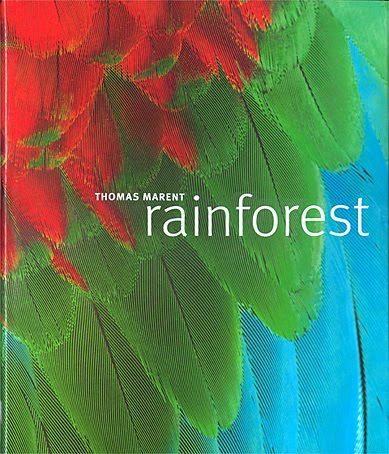
Rainforest by Thomas Marent


Few things are freakier to our New York City students than purple beetles, bright blue crayfish, and iridescent spiders. These and so many more wonderfully interesting-looking creatures are portrayed page after page in this collection of colorful and vivid photographs taken by Thomas Marent in rainforests all around the world. Thankfully, every picture gets a caption, which is often necessary for figuring out what the subject is exactly. In addition to the close-ups of animals and insects, there are pictures of waterfalls, trees and other plant-life, within the dense forest and sweeping landscape shots taken from above. The rainforest really looks like it might be paradise until the reader stumbles upon the pictures of the many varieties of tarantulas and jumping spiders that call these forests home. This book is a fantastic choice for many students, including struggling and reluctant readers -- the pictures are so captivating; it is hard to avoid getting sucked in.

Marent, Thomas. Rainforest. New York: DK Publishing, 2006.

Tuesday, January 18, 2011

Kids Draw Anime by Christopher Hart

Sometimes the library gets readers excited about reading. Sometimes the library gets non-readers excited about reading. And sometimes the library helps non-readers tolerate being in a reading space -- while they maintain that they do not want to read -- by providing them with drawing books. Those drawing books can help with reading. In the case of Kids Draw Anime, we have a drawing book that sneakily offers its readers some help decoding manga through its instructional “adding expressions” section on page 15. I recommend this book to readers looking for a how-to drawing book, and teachers who may be pioneering instruction with manga and need a visual reference for how to read anime expressions.

Hart, Christopher. Kids Draw Anime. New York: Watson-Guphill Publications, 2002.

Monday, January 17, 2011

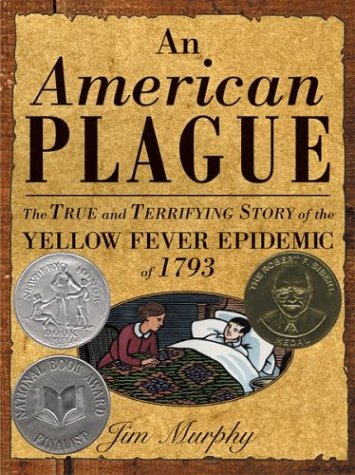
An American Plague by Jim Murphy


If a deadly and contagious sickness struck your city, and the wealthier classes began to evacuate, would you stay, and help your fellow citizens? Or would you leave with your family and head for safety? Appropriately subtitled The True and Terrifying Story of the Yellow Fever Epidemic of 1793, the story begins one hot summer in Philadelphia when all were faced with this question. This non-fiction title does not have a cover that draws the viewer in, nor does it have an opening line that grabs you by your neck and forces you to keep reading. But if you can start on Chapter 2, with its grisly death scene, or pitch students a story about a plague that attacked the United States before it extended beyond its current eastern coast, the reader will be richly rewarded with a harrowing story of death and perseverance, racism and heroism, politics and a glimpse at life in the U.S. just after its revolution. George Washington and the Free African Society are major players in this 139 page title which is followed by sources and an index. Pair it with Anderson’s Fever 1793 (click here for scholastic's lesson plans to teach it), or assign it as supplemental reading to students studying 16th century American History. An interesting point of contrast with contemporary literary responses to the AIDS crisis, this just might interest future public health advocates and policy makers in their course of study.

Murphy, Jim. An American Plague: The True and Terrifying Story of the Yellow Fever Epidemic of 1793. New York: Clarion Books, 2003.

Friday, January 14, 2011

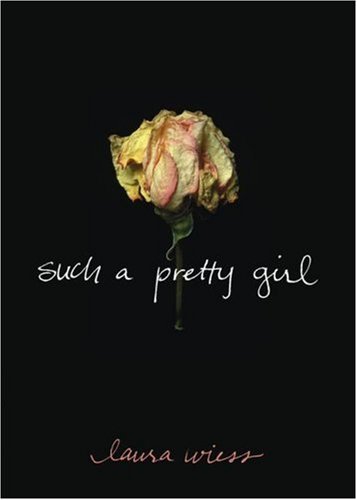
Such a Pretty Girl by Laura Wiess

Imagine the man found guilty of raping you when you were twelve was being released from prison after serving three years of a nine year sentence. Now imagine that man is your father, and your mother couldn’t be more thrilled that he’s coming home. That’s the situation for fifteen-year-old Meredith in Such a Pretty Girl. The reader follows Meredith during her frightening first encounters with her father, and glimpses the abuse she suffered through flashbacks. Andy, another victim of her father’s, has always been Meredith’s rock, but begins to break when her father is back on the scene. Meredith is fraught with conflict over preserving her own safety or putting herself in harm’s way to make sure her father can never abuse another child. This book is gripping and suspenseful from beginning to end. Students appreciate the injustice of Meredith’s situation, her resilience, and the satisfying ending.

Wiess, Laura. Such a Pretty Girl. New York: Pocket Books, 2007.

Monday, January 3, 2011

I and I: Bob Marley by Tony Medina, illustrated by Jesse Joshua Watson

Tony Medina explains, “[I and I] discourages thinking of oneself solely as an individual but instead as part of a community.” Written in verse that imagines Marley’s life recounted in his voice, this biography of Bob Marley explores these communities, the childhood, religious, and political roots that came to shape Marley’s signature reggae style. Watson illustrates each poem with a boldly colored painting that captures the moment and mood. The book ends with a Notes section where the biographical details and information that motivated each poem are explained in accessible language. Many of our students are drawn to Bob Marley’s story, but others may come to this book out of an interest in poetry, art, or biography in general. Teachers may use this book to teach biography, first-person perspective, and poetry.

Medina, Tony and Jesse Joshua Watson, illus. I and I: Bob Marley. New York: Lee & Low Books Inc., 2009.

Wednesday, December 15, 2010

The Brothers Torres by Coert Voorhees


Have you ever watched someone you love walk a dangerous path? A frustrated Frankie Torres Towers is watching his older brother, Steve, becoming more aggressive and irresponsible as he chooses to run with the cholos, a local group of thugs, putting his soccer scholarship at risk and causing tension at home between Frankie, Steve, and their parents. Briefly, Frankie benefits socially from his brother’s new affiliation as he pursues his childhood love interest, Rebecca Sanchez, and butts heads with romantic competitor and local bully, John Dalton. But the plot climaxes as Frankie is forced to choose between gaining the respect of Steve and the cholos and maintaining his own integrity and budding romance with Rebecca. Although the plot is heavily tied to the New Mexican setting, the novel’s themes of friendship, family, first love, violence, loyalty, brotherhood, and peer pressure are universal. This coming-of-age tale has also been selected by the American Library Association as a Great Stories Club book.

Voorhees, Coert. The Brothers Torres. New York: Hyperion Books, 2008.

Tuesday, December 14, 2010

Superman: the Ultimate Guide to the Man of Steel by Scott Beatty


Many people love Superman, but I think most people, even big fans, will find a lot of new information in this oversized guide to one of the original superheroes. Its format is almost like a visual encyclopedia; each double-page spread is dedicated to one Superman theme, and there are captions and little informative blurbs scattered around vivid, full-color drawings against a full-color background. While these themes are not arranged alphabetically, there is a sense of order -- the book is grouped into five main areas of focus: Birth of Superman, City of Tomorrow, Secrets of the Man of Steel, Supervillainy, and Superman’s Career. The back of the book features a detailed timeline of Superman through the years, both his story and the commercial development of the product. There is also a table of contents and an index. This book is very popular with students and adults; everyone likes to point out their favorite characters and story lines.

Beatty, Scott. Superman: The Ultimate Guide to the Man of Steel. New York: DK Publishing, 2002.

Friday, December 10, 2010

Advance Reading Copy: Kick by Walter Dean Myers and Ross Workman


Late one night a witness sees a car careening about before it slams into a lightpole. The two young occupants of the car are no more than thirteen years old. The soccer-playing boy goes to juvie and the girl goes home. Will the girl’s father press charges? Set in suburban New Jersey and told in alternating chapters by the savvy Sergeant Brown and 14-year old Colombian-Irish-American Kevin, advance reading copies of this novel were snapped up by Passages’ students this week. Readers who appreciate the way Walter Dean Myers consistently and deftly weaves sports, a plot involving the threat of juvenile detention, young people coming of age, and themes of family, responsibility, and caring about others will find the satisfaction they’ve come to expect from this author and his co-author.

Two differences set this title apart from Myers’ multiple novels featuring 14-year-old male protagonists who wrestle with becoming adults while they play to win. The first difference is the sport; in Kick, soccer replaces Myers’ favorite athletic team endeavor, basketball. The second difference of note is fact that Mr. Myers co-wrote this book, unusually, with a teenage author, Ross Workman. Mr. Myers visited Passages Academy’s students here at Bridges this Wednesday, which provided a perfect opportunity to re-evaluate the appeal of a variety of his texts. Survey says: most of our students are interested in reading anything Walter Dean Myers has written.

Thursday, December 9, 2010

Jude by Kate Morgenroth


Life isn't always fair. In Jude's case, life has been extraordinarily unfair. When his physically abusive, drug-dealing father is murdered in front of him, Jude is caught in a web of lies after he tells the police that he didn’t see the killer -- but he is only lying to protect himself. Life takes another turn when he is reunited with his high-powered District Attorney mother, who he had previously believed abandoned him and his father. Turns out he's been lied to this whole time; his father kidnapped him as a baby and had been hiding out for 15 years. Jude isn't even the name his mama gave him. When he leaves the rough neighborhood he's called home all these years to live with his wealthy mother and attend a fancy private school, it seems as though things are finally looking up. But when Jude is sort-of involved in a classmate's drug overdose, he takes the fall because his mother’s boyfriend convinces him that it will help his mother get elected as mayor. Even though it sounds like a bad idea, Jude goes along with the plan in the hopes of making his mother proud of him, and truly believes all will be forgiven when she learns of his innocence. Readers will surely root for Jude as he suffers injustice after injustice, both in and out of prison in this gripping page-turner.

Morgenroth, Kate. Jude. New York: Simon & Schuster Pulse, 2006.

Tuesday, December 7, 2010

Guest Blog Post: The Maze Runner by James Dasher


Thomas doesn’t know anything about himself except for his first name. He stands in a large, slow moving elevator trying to dig up something from his past but all he can see is blurry faces in no-name towns. The elevator comes to a sudden stop and the doors swing open. The light blinds him for a moment and then he sees dozens of teenage boys, just like him, waiting for his arrival.

Thomas is now part of the Glade, a society of boys without their memory who have built their own society under the control of the Creators. The only way out is through a Maze outside of the Glade’s walls that is constantly changing and filled with danger. The day after Thomas arrives; the Glade gets its newest member and its first girl. She’s lying in the elevator when the doors open, close to death and there is a note in her hand that says “everything changes.”

Even though he doesn’t remember her, Thomas feels a strong connection with the new girl and believes that with her help, he can find a way out of the Glade. All he needs is the support of his fellow Gladers which is easier said than done.

The Maze Runner is action packed and moves very quickly. There is a lot of heartbreak and suspense in the book and you’ll finish it waiting for more. Luckily there is sequel coming out soon! --Lindsy Serrano

Click here for the eerie book trailer.

Lindsy Serrano is a librarian at the New York Public Library and has visited Passages’ students to discuss books, reading, and libraries since 2006. She blogs regularly at http://lindsyinthecity.blogspot.com/ and on NYPL blog channel Stuff for the Teen Age.

Friday, December 3, 2010

Zine Review: Magical Guide to Rainbows by Kacper


Most folks are surprised to hear the word "zine" and "school library" in the same sentence, PA participants from the Zine PD at Boys Town way back in '07 and Mr. B notwithstanding. While yes, it is true that this collection is not readily available inside any of our libraries while I type this, that is a matter soon to be remedied, and all the more reason to tell you about some of the gems in our collection. I'll kick the reviews off with one of my favorites: Kacper's Magical Guide to Rainbows. What's magical about this 8 .5 x 11 stapled zine is Kacper's imaginative cataloging of rainbow types. Of course they don't exist in visible reality, but this zine's rough aesthetics (check out the aforementioned staples and the white-out style font on the photocopied cover) and straightforward listing get the zine format's accessibility across better than any paragraph I could construct. It’s an "If Kacper can do it, you can too." And if Kacper wants to be known at Kacper, the Ambassador of Candyland, well, then we can start a brainstorm session on pseudonyms. After we review mnemonic devices for remembering how to spell "pseudonym."

Until it's moved to a permanent site, email me if you'd like to check out Magical Guide to Rainbows or one of the other dozens of zines in our library collection. If you want to purchase a copy for your own collection, here's the link to Candyland.

Thursday, December 2, 2010

Guest Blog Post: A Long Way Gone: Memoirs of a Boy Soldier by Ishmael Beah


This is the true story of the life of a boy who suffered the unimaginable and inconceivable horrors of war as a child soldier in Sierra Leone. The story of Ishmael Beah’s transformation from a 12 year old boy who loves to dance to American music with his friends into a thoughtless killer is penetrating and real. Every page is powerful because the terrors of war were forced upon the innocence of children and their families. Ishmael’s ability to succeed is not based on heroic or honorable deeds but rather his sheer determination to simply adapt and survive. This book forces the reader to confront his or her own thoughts and feelings of how he or she would have responded. What if it were you who was there? What would you have done…really? Ishmael has more than the war to battle as the loss of family, friends and his emotional control sends him on a path of drug abuse, killing, revenge, rehabilitation, reconnection, and finally safety within the United States. Ishmael’s story offers the reader hope in the power of rehabilitation and the power of opportunity on our behaviors. Ishmael has incredible talents and gifts that were almost stripped away from him because of his circumstances. This book is guaranteed to capture the reader’s attention and hope as he or she joins Ishmael on his quest for survival and safety. Ishmael’s story helps to make the seemingly impossible possible. -- Stephen Wilder

--Stephen Wilder is the principal of Passages Academy and a literacy leader.


Beah, Ishmael. A Long Way Gone: Memoirs of a Boy Soldier. New York: Farrar, Straus and Giroux, 2007.

Wednesday, December 1, 2010

Sports Illustrated: The Football Book


Football season brings many things: incredible plays by the fastest quarterbacks, rough and tumble tackles by the biggest and baddest defensive players, and of course, devoted fans. This book examines the sport from many angles with color and black and white photographs galore and articles compiled from Sports Illustrated magazine. Some standouts are the pictures of old equipment and uniforms, championship rings, ticket stubs and other ephemera from the early days of football. It also touches on the role of famous athletes in advertising, and highlights some of the most memorable ad campaigns. Missing, unfortunately, are any pictures of the cheerleaders who work so hard from the sidelines. This large format book is a perfect fit for football fans, but it is also an appealing resource for those who have a more general interest in sports or for those who enjoy looking at pictures from earlier times. With all of the information included on the history of the game, it will also appeal to fans of pop culture. This book has been especially popular at Summit lately, where students are participating in a football team program through the Division for Youth and Family Justice.

The Football Book. New York: Sports Illustrated Books, 2005.