Showing posts with label Hispanic Heritage. Show all posts

Tuesday, October 7, 2025

Programming Spotlight: Celebrating Hispanic Heritage Month with Percussion

From left to right: Ms. Leibusor, Special Education teacher, Ms. Carter, Math teacher, and Mike Ramsey, Percussionist and Music educator (photo credit: Ms. Fenster-Sparber)
Mike Ramsey leads us in the library.  (photo credit: Ms. Fenster-Sparber)

Recently our Belmont site hosted an eight- session percussion workshop led by returning percussionist and extraordinary music educator Mike Ramsey.  


Mr. Ramsey brought with him conga drums, an African drum, a guiro, maracas, cowbells, bongos, claves, and shekere for students to play, and gently guided us into a rhythmic jam.  He highlighted the Afro-Cuban group Adonis y Osain del Monte and illuminated the connection between west African drums.  


Student and staff feedback was overwhelmingly full of requests for more. Said student who participated in the workshopa at its conclusion:  “I LOVE This Come Back Soon #Begging you.” --Jessica Fenster-Sparber

Monday, March 3, 2025

Who Was Selena? by Kate and Max Bisantz

Who Was Selena,  part of the Who Was? biography series,  provides a cogent overview and empathetic perspective of the life of Selena Quintanilla,  the beloved Texas-born  singer of Latin music,  known as the Queen of Tejano.  Students will be interested to learn how she skyrocketed to fame at an early age, had to  learn Spanish as a second language, and tragically died young.  

Significantly, the first chapter outlines the discrimination faced by Texans with Mexican ancestry like Selena.  In keeping with the series, this volume includes sidebars on schema-building topics like the Corpus Christi City Directory, Tejano Music, Laura Canales, and Gloria Estefan.  Black and white illustrations and white space make this an especially attractive choice for newly independent readers.  Backmatter includes Selena’s discography, a timeline of her life, and what was happening in the world during those years including the opening of Walt Disney World in Orlando, Florida,  and the presidential campaign of Shirley Chisholm, the first Black woman elected to the US congress.  --Jessica Fenster-Sparber


Bisantz, Kate and Max.  Who Was Selena?  New York City: Penguin Wrrkshop, 2018.  Print.

Monday, September 18, 2023

Welcome Back!


 Welcome back to an exciting new school year!  The Passages Academy Library team is ready to provide innovative and social-emotional based student programming for our court-involved students.  As we celebrate Hispanic Heritage Month we'll explore the life of Frida Kahlo and how in the early 20th century she managed her social-emotional well-being by using self-portraits or art therapy to alleviate and/or mitigate her daily pain.  Self-care in any form is vital.  Stay tuned . . . great literacy is on the horizon!--Jamila Abdulrashid

Tuesday, September 18, 2018

Programming Spotlight: Hispanic Heritage Month


Today at Belmont four groups of students engaged in multi-dimensional learning in a program honoring Hispanic Heritage Month.  

Kicking off four weeks of study, we asked students to activate schema around Latin America, and then challenged them to put together a Latin America geography puzzle.  When the puzzle was completed we asked students what they noticed and then instructed them to generate a list of questions they have about Latin America and its people.  --Lori Ikawa and Jessica Fenster-Sparber


Tuesday, September 19, 2017

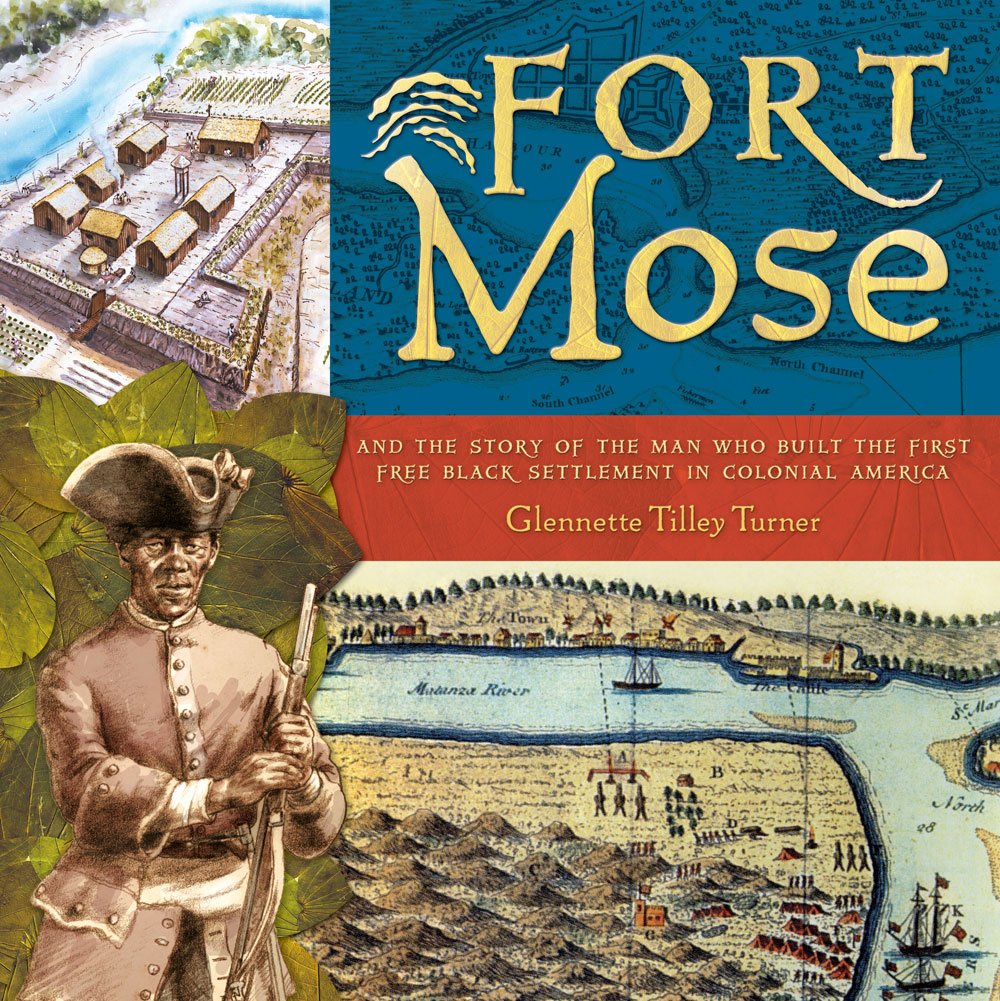
Fort Mose: And the Story of the Man Who Built the First Free Black Settlement in Colonial America by Glennette Tilley Turner


The title says it all: who among us wouldn’t be fascinated by the origins of the first free black settlement in colonial America?  While students may not initially settle upon this title as an independent reading selection, its concise presentation and accompanying images of historical maps, illustrations, and portraits present a part of American history not usually included in survey textbooks and offers insight into Spain’s complex role in liberating enslaved Africans and Native Americans from British slavers.  Multilingualism, Catholicism, piracy, Cuba and rice all have parts to play in this short story presented in a picture-book sized volume in which the text takes center stage.  Backmatter includes an afterword on Fort Mose today, an author’s note, acknowledgements, a glossary, notes, a list of sources and credits capped off by an index, making this volume well-poised for inquiry instruction for readers who are reading for information and newer to research.--Jessica Fenster-Sparber

Turner, Glennette Tilley.  Fort Mose: And the Story of the Man Who Built the First Free Black Settlement in Colonial America.  New York: Abrams, 2010. Print.

Monday, March 30, 2015

Sneak Preview: Ghetto Brother: Warrior to Peacemaker by Julian Voloj, Illustrated by Claudia Ahlering


In the last five years there has not been an obvious response to reader demand for another book “just like Yummy,” and that is set to change in May with the publication of Ghetto Brother.  The story of Benjamin Melendez’s founding of, and later departure from, the South Bronx-based gang builds a bit slowly while author Julian Voloj takes the time to lay the foundation for what is yet to come. The true history of the gang’s founding and its role in brokering a peace is all the more surprising in light of later revelations due to the care taken in the first part of the story.  Voloj does Melendez’s tale justice by prioritizing the narrative storytelling over factual minutia, and the black and white artwork by Claudia Aherling utilizes fine detail and watercolor to eschew a cartoonish-ness that might otherwise make this street-language-filled edition appeal to younger readers.  Themes of maturity, identity, and responsibility recommend this book to older teens. 

 Ghetto Brother depicts a fascinating slice of New York City/ South Bronx history that pairs well with Panther Baby and touches on Columbus’s arrival in the western hemisphere and the Spanish Inquisition.  Back matter includes eight pages of photographs and the author’s recounting of the “story behind the story,” where Voloj explains that the book is primarily based on interviews with former activists.  He goes on to list additional resources consulted and includes photos of Melendez himself during the years of his gang involvement as well as Melendez now, forty plus years later.--Jessica Fenster-Sparber


This review is of an advance reader’s copy provided by the publisher to the reviewer.  This title is scheduled for release in May.

Click here to see Melendez talking about GB's former storefront right in front of former Passages' site Summit(?!).  (around 2:26)
 
Julian Voloj and Benjamin Melendez will be signing books at MoCCA Fest 2015 on April 11th (both from 1:30-3pm, and Julian Voloj alone from 5 to 6pm) and 12th (Julian Voloj alone from 12-1pm, and both Julian Voloj and Benjamin Melendez from 3:30-5pm).   

Friday, October 17, 2014

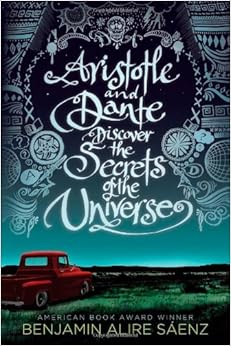
Aristotle and Dante Discover the Secrets of the Universe by Benjamin Alire Saenz


While desperately trying to discover the secrets of the universe outside of himself, a boy called Ari stumbles upon the secrets within himself. Ari is a typical young teenage boy dealing with the pain and glory of youth, just as all teenagers do, when he finds an unlikely confidante in another teen, Dante, at a local pool. Dante and Ari set out to discover what the world has to offer them and encounter some of its dangers along the way. Through the struggles and joy of their friendship, the two uncover deeper truths about the world, themselves, and what they mean to each other. I would highly recommend this wonderfully captivating book to teens, male or female, who are also trying to discover themselves, the world around them, and how to navigate it all.--Jenny Caliendo


Teachers and librarians may want to note that this is a significant LGBTQ book, addressing class differences, Latino identity, and queer identity in a way that is non-threatening to a teen reader.  Vamos A Leer has put together a teaching guide for this novel here.--Jessica Fenster-Sparber


Jenny Caliendo is a special education educator at Passages Academy's Belmont site.  She enjoys co-teaching ELA classes.  Jenny is also an author as well as a talented songwriter and musician and can be seen and heard performing at Belmont on special occasions.

Monday, September 15, 2014

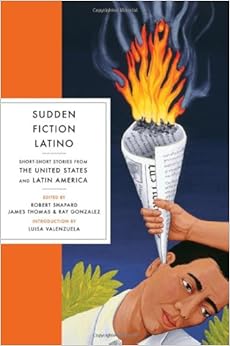
Sudden Fiction Latino: Short Short stories from the United States and Latin America


For Passages Academy it seems that Latino History Month and our ELA short story curricular unit are destined to occur at the same time each Fall. Thus, teachers seeking extremely short fiction, totalling about four pages or less, and stories with a connection to Latino/a history, may be interested in this volume.  Although many of the stories will not appeal to reluctant adolescent readers, short pieces by literary greats like Rudolfo Anaya (“The Native Lawyer”) and Gabriel Garica Marquez (“Light is Like Water”), may serve as a worthy introduction to these canonical authors.   “Day Ah Dallas Mare Toes,” by Luna Calderon, and “Counterfeit,” by Edmundo Paz Soldan, on the other hand, have a charm all their own and might just provoke meaningful discussion on themes of truth, deceit, family, and death and the role of names in literary texts and life.  This link from the publisher allows readers to view the entire table of contents, some of which are hyperlinked to permit previews of the text.  --Jessica Fenster-Sparber


Shapard, James Thomas and Ray Gonzalez (Eds.)  Sudden Latino Fiction:  Short-short stories form the United States and Latin America.  New York:  W. W. Norton & Company, 2010.

Monday, May 12, 2014

Mixed: Portraits of Multiracial Kids by Kip Fulbeck


This paperback volume containing arresting portraits of multiracial kids is picked up at least once a day in our library at Belmont.  Students pore over the small, matte images, regularly expressing their surprise and delight with the mixture lists, often the only text present in addition to the subject’s name.  Some of the portraits are accompanied by drawings done by the subjects themselves.  Occasionally, a portrait appears side-by-side with a quote from a parent about their child or thoughts on multiraciality.  These images and minimal text are bookended by an introduction from Fulbeck, a filmaker/photographer/spoken word performer/author, and a quote from Cher.  Adult readers may be interested in the foreword penned by Dr. Maya Soetoro-Ng, sister of President Barack Obama.  Student readers just go right to the portraits.  A great stress-free read for school libraries and conversation starter for teachers strategizing conversations on multiraciality. --Jessica Fenster-Sparber


Fulbeck, Kip.  Mixed: Portraits of Multiracial Kids.  San Francisco: Chronicle Books, 2010. Print.

Wednesday, December 18, 2013

East Side Dreams by Art Rodriguez

Rodriguez’s heartfelt memoir begins with the night that changed his life and led to his lengthy stay in a juvenile detention facility. Growing up in a Mexican-American family in San Jose, California, Rodriguez had a mother who was seemingly oblivious to his violent antics and a father who believed that physical abuse was the only way to set his children straight. While sometimes providing more detail than needed, Rodriguez’s storytelling makes it easy for the reader to picture his family, his neighborhood and the detention facility where he spent so much time. Rodriguez is clearly proud of the way his life turned out; he left the fighting and trouble-making for a happier life, one with a large family and his own business. Unfortunately, Rodriguez glosses over that process, and it’s never entirely clear what motivated him to turn his life around. Still, this book is likely to be popular with students who ask for books about real people who have spent time in prison.  --Anja Kennedy


Rodriguez, Art. East Side Dreams. San Jose, CA: Dream House Press, 1999. Print.

Tuesday, September 21, 2010

Che: A Graphic Biography by Spain Rodriguez


You have seen his face on t-shirts, posters, hats, and billboards. But why is "Che" the cultural icon that he is today? Ernesto "Che" Guevara's life, from his birth to a middle-class Argentinian family to his death in Bolivia, is documented here in graphic format. Most famous for his part in the Cuban revolution, the reader learns about his pre-revolutionary life, his family life, and his revolutionary efforts in the Congo and Bolivia. Direct quotes from Che are used throughout, some including complex political concepts. While the author's stance is decidedly pro-Che, an epilogue discusses the controversy surrounding the construction of Che's image as either hero or villain using sophisticated language. This volume might best be used during Hispanic Heritage Month, for a Global Studies unit on revolutions, or by a student interested in learning more about the life of Che.

Rodriguez, Spain. Che: A Graphic Biography. New York: Verso, 2008.