Showing posts with label reluctant readers. Show all posts

Thursday, May 25, 2017

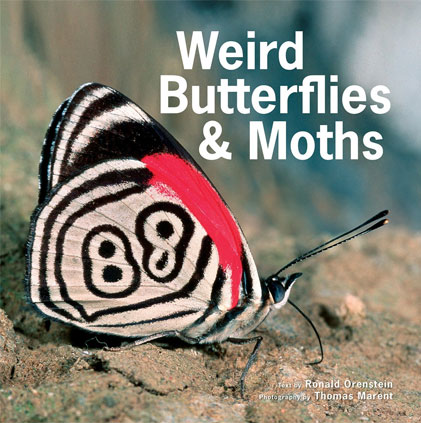
Weird Butterflies & Moths Text by Ronald Orenstein Photography by Thomas Marent

Both images are from the photographer's website, www.thomasmarent.com


Thomas Marent’s stunning high-definition photographs of moths and butterflies are each accompanied by six to eight sentences from Dr. Ronald Ornstein who holds a PhD in zoology and has authored numerous books on science and nature.  His tack in this title is to whet the reader’s appetite for more with intriguing facts about butterflies and moths.  The last third of the book showcases some of the more surprising images of caterpillars and a couple of pupas. This book will work well for developing a student’s interest in an inquiry undertaking and can be read from start to finish or browsed.  Backmatter is limited to an index and Orenstein’s one-page introduction provides a welcoming invitation to this 63-page volume.  Perfect for reluctant readers and less-sophisticated adolescents reading at an upper-elementary or lower-middle school level. —Jessica Fenster-Sparber

Orenstein, Ronald and Thomas Marent.  Weird Butterflies & Moths.  New York: Firefly Books, 2016.  Print.

Monday, March 7, 2016

Fable Comics edited by Chris Duffy


For teachers who cover fables: ELA, Greek and Latin, and general elementary teachers, as well as ESL and Reading specialists who provide academic remedial support to students whose teachers are covering fables, this title will be of interest.  The inimitable Chris Duffy has collected 28 fables, two-thirds attributed to Aesop and the balance being from a variety of cultures including American, European, Asian, and African.  As with all anthologies, the mix means that some hit their mark while others miss.  For teachers providing remedial support, the longer fables may be the most useful, among them Kochalka’s “The Fox and the Grapes,” Sikoryak’s “Lion + Mouse,” and Hernandez’s “The Boy Who Cried Wolf” offer stronger entry points.  The variety Duffy has assembled means that fans of the Flight and Explorer anthologies, and graphic novel fans in general will find favorite artists like George O’Connor and Maris Wicks mixed in with previously-unfamiliar illustrators like Corrine Mucha and Keny Widjaja.--Jessica Fenster-Sparber

Duffy, Chris (Editor).  Fable Comics.  New York: First Second, 2015.  Print.

Click here for a lesson plan from the anthology's own Corrine Mucha via First Second's website.

Wednesday, February 24, 2016

Lowriders in Space by Cathy Camper, illustrated by Raul the Third


Lupe, Flapjack, and Elirio love working with cars and want to open their own autoshop, but they are broke.  They decide to enter an auto competition with the hopes of winning the prize money that can get them started on their dream.  Collaborating on this project takes them to outer space and back.  

Nothing about the title or premise led me to think that this book would be a particular hit with the adolescents I serve here in NYC where lowrider culture is not as prevalent as it is in other parts of our large country.  But what to give the sixteen-year-old artist I serve who told me that he loves cars and is dyslexic and whose first language is Spanish?  Lowriders in Space has incredible artwork done in pen and the artist writes, “I decided to draw Lowriders in Space with red, blue and black ballpoint pens to revisit the excitement I felt as a kid whenever I drew.” Backmatter includes notes from the artist and author, a glossary for Mexican-American slang, car, and astronomy terms found in the story, and a one page epilogue to whet the reader’s appetite for Volume 2, which will be released by Chronicle on July 5th.  The best part, for developing readers who are already bilingual in Spanish and English, is that the book is 112 pages long and most pages contain 15 words or less. --Jessica Fenster-Sparber

Camper, Cathy.  Lowriders in Space.  San Francisco: Chronicle Books, 2014.  Print.

Click here for a short book trailer video on youtube.  Click here to visit the publisher’s page where you can download a free teaching guide to Lowriders in Space.

Wednesday, February 10, 2016

Drowned City: Hurricane Katrina & New Orleans by Don Brown


“What happened at the N’awlins?”


Teen readers are too young to remember Hurricane Katrina, but Beyonce may have just inspired their curiosity with this weekend’s release of her new video “Formation.”  For adolescent readers wondering why the pop star depicts herself atop a submerged police car, and, later, drowning atop that car, or those struggling to connect the dots between the drowning imagery and the video’s juxtaposition of graffiti that reads “Stop shooting us” at 4:26, Don Brown has written and illustrated a compelling, grave, illuminating and now award-winning volume.  In full color with shades and tones of sadness, this text is less than 100 pages long and most pages contain a maximum of two sentences of text, making this highly recommended for reluctant teen readers with a taste for graphic novels and teachers looking for a hybrid non-fiction text.  This book concludes with a thorough listing of source notes, a bibliography, and a closing dedication.--Jessica Fenster-Sparber

Brown, Don.  Drowned City:  Hurricane Katrina & New Orleans.  Boston:  Houghton Mifflin, 2015.  Print.

Monday, June 22, 2015

The New Earth From Above: 365 Days by Yann Arthus-Bertrand


This rectangular pictorial seeks to bring immediate attention to the plight of the earth and its peoples through 365 fascinating and gorgeous aerial photographs of a wide variety of ecosystems around the world.  Originally presented as an international travelling photo exhibition, this dense volume shrinks the exhibition into a compact, portable portal for readers everywhere.

The New Earth is broken into twelve chapters corresponding to the twelve months of the year, and each chapter begins with a three-page essay by a different French author.  These contributors cover topics like climate change, biodiversity, renewable energy, abolishing poverty, and fair trade.  Students will be interested in seeing a garden greening a desert, olive groves, rice fields and frozen forests.  Each full-page photograph is accompanied by one paragraph of text explaining the image  and connecting it to the environmental and/or social context and threats alluded to in the visual.  The text is supplemented by a map detail with a “you are here” marker, providing geographical context, as well as the latitude and longitude address for the location.  Social Studies teachers planning lessons on map skills or preparing students for initial phases of inquiry brainstorming may find this book to be of use.  This text will likely appeal to browsers and reluctant readers.  Backmatter contains an index of countries, acknowledgements, and an overview of goodplanet.org.  --Jessica Fenster-Sparber

Arthus-Bertrand, Yann.  The New Earth From Above 365 Days.  New York: Abrams, 2009.

Monday, December 8, 2014

How it Went Down by Kekla Magoon


Tariq, a sixteen-year-old African-American teen, goes to the store for his mother to buy some milk and picks up a Snickers bar for his little sister.  On his way home he is confronted by a neighbor who perceives that Tariq has a gun.  A third person, Jack Franklin, approaches, shoots, and kills Tariq and drives away.  Franklin is subsequently apprehended by the police and let go.  National activist and political figure Reverend Alabaster prepares to make his move into the spotlight while the nation is asking for answers and Tariq’s mother is asking for justice.  Sound familiar?  

Magoon’s polyphonous novel is thick with topical relevance and the challenges of multiple points of view.   It’s first few pages ensnare the reader within a web of suspense structurally furthered by short chapters.  Characters like Brick and Noodle, members of the local Kings 8-5 crew, will appeal to reluctant male readers and others like Jennica, Noodle’s girlfriend and witness at the crime scene; Kimberly, Tariq’s former babysitter-cum-professional stylist; and Tina, Tariq’s little sister, will appeal to female readers, making this a great text for mixed gender book clubs and class discussions. ELA teachers will find this a rich selection for teaching perspective, voice, and character development.  Highly recommended for fans of Walter Dean Myers’ Street Love.  --Jessica Fenster-Sparber


Click here for a discussion guide from the publisher.


Magoon, Kekla.  How It Went Down.  New York: Henry Holt & Co., 2014.  Print.

Wednesday, December 3, 2014

Scholastic Ultimate Guide to Football by James Buckley Jr.


Scholastic Ultimate Guide to Football by James Buckley Jr.

Did you know that passing was not allowed in American football until 1906?  Taking an informal tone, Buckley’s Guide mixes history, random facts, statistics, photographs, and cartoonish drawings to provide an introduction to America’s most popular sport.  Assuming some prior knowledge of the game, the Guide alternates between informational pages on each of the National Football League’s 32 teams and features on football trivia like superstitious practices used by NFL players, regrettable quotes and actions from NFL coaches, classic referee signals currently in use, and touchdown heroes.  Each team’s two-page spread includes the year the team formed, a highlight and low point for the team, their home venue, number of Superbowls won, best seasons and additional team facts.  Backmatter includes a few additional print and web-based resources for information on American football and an index.  Teens may not appreciate Buckley’s corny jokes, but those with an interest in broadening the scope of their knowledge of the sport will be glad to have so much information in one lightweight volume. --Jessica Fenster-Sparber

Buckely Jr., James.  Scholastic Ultimate Guide to Football. Santa Barbara: Shoreline Publishing, 2010.  Print.

Click here for a link to Edutopia's lesson plans for a variety of subject areas incorporating American football.

Thursday, June 12, 2014

Snitch by Allison Van Diepen


Julia DiVino has a plan for her future and it does not involve the gang life.  Julia has managed, with her best friend Q for support, to stay clear of the constant gang-related violence and drama at her Brooklyn high school, despite the fact that some of her friends are in rival gangs.  When gorgeous Detroit-transplant, Eric Valiente shows up, he and Julia fall hard and fast for each other.  But soon he reveals his gang-involved past and joins up again, breaking Julia’s heart in the process.  Then, at a club one night, Julia warns Eric that he’s about to get jumped.  With that one act, her life will never be the same - no one’s will.  Because everyone is not who they seem and she’s not the only snitch.


Snitch is a fast-paced, drama-filled novel that has wide appeal - it is one of the most popular books in our libraries.  Its accessible language and straightforward structure make it a solid independent reading choice for reluctant readers ready to move on from the Bluford High series or similar books. --Regan Schwartz

Those looking to facilitate a book club discussion of Snitch is may want to take a look at the teacher guide available here. 

Van Diepen, Allison. Snitch.  New York: Simon Pulse. 2007.

Tuesday, June 10, 2014

Upstate by Kalisha Buckhanon


Seventeen-year-old Antonio pleads guilty to his abusive father’s murder; whether he did it or not is unclear, but he’ll still have to serve ten years for it.  Natasha, Antonio’s girlfriend, swears she’ll wait for him.  But ten years is a long time, and while Natasha is getting ready to go to college and explore the world, Antonio is stuck in a four-by-ten room.  Upstate allows the reader to see how two intertwined lives can go in complete different directions over the course of ten years.  The entire narrative of the book is wonderfully done in correspondence between Natasha and Antonio.  The letters between the two at first come almost daily and eventually devolve to a handful a year.  Did Antonio really kill his father? Where will Natasha be when Antonio is finally released? Upstate is a great independent read for fans of Paul Volponi’s Riker’s High and Walter Dean Myers’ Lockdown. --Claudio Leon

Teachers and book club facilitators may want to check out Macmillian's teacher guide to upstate here.
 
Buckhanon, Kalisha. Upstate. New York: St. Martin’s Press, 2005. Print.

Thursday, May 29, 2014

Street Pharm by Allison van Diepen

Ty Johnson is at the top of his game, following in his father’s footsteps and making a fortune selling drugs. Even though his dad is serving time, Ty still gets plenty of advice from him -- including the name and phone number of a hitman to take out Darkman, a new competitor. But Ty is not just like his father and the decision he makes about Darkman and his crew might just cost him his life.


Ty struggles to find a balance between keeping his rep as “King of the Streets” and having an ordinary high school life. While his dad is relying on him to keep the business running, his mom insists he leave the streets alone. When he meets the girl of his dreams, he realizes he might need to leave his street life behind before she discovers who he really is. Street Pharm has long been a favorite among students at Passages Academy; it ranks among the most popular novels in our libraries. --Anja Kennedy


van Diepen, Allison.  Street Pharm.  New York: Simon Pulse-Simon & Schuster, 2006.  Print.

Friday, May 16, 2014

Slam Kicks: Basketball Sneakers that Changed the Game edited by Ben Osborne


With a simple, yet inviting cover and colorful photographs of sneakers and the basketball stars who wore them on every page, this new acquisition has quickly become one of the most popular books in the Bronx Hope library. In addition to the attention-grabbing pictures is a collection of articles ranging from sneaker collecting to the history of the Nike Air Jordan I. The articles may not be the initial draw for students, but because they’re written in an accessible style similar to what might be found in a magazine, students are likely to pick up some interesting facts about the basketball sneaker business just through browsing. Highly recommended for basketball and/or sneaker enthusiasts and reluctant readers of all ages. --Anja Kennedy
Osborne, Ben, ed.  Slam Kicks: Basketball Sneakers that Changed the Game.  New York: Universe-Rizzoli, 2013.  Print.

Monday, May 12, 2014

Mixed: Portraits of Multiracial Kids by Kip Fulbeck


This paperback volume containing arresting portraits of multiracial kids is picked up at least once a day in our library at Belmont.  Students pore over the small, matte images, regularly expressing their surprise and delight with the mixture lists, often the only text present in addition to the subject’s name.  Some of the portraits are accompanied by drawings done by the subjects themselves.  Occasionally, a portrait appears side-by-side with a quote from a parent about their child or thoughts on multiraciality.  These images and minimal text are bookended by an introduction from Fulbeck, a filmaker/photographer/spoken word performer/author, and a quote from Cher.  Adult readers may be interested in the foreword penned by Dr. Maya Soetoro-Ng, sister of President Barack Obama.  Student readers just go right to the portraits.  A great stress-free read for school libraries and conversation starter for teachers strategizing conversations on multiraciality. --Jessica Fenster-Sparber


Fulbeck, Kip.  Mixed: Portraits of Multiracial Kids.  San Francisco: Chronicle Books, 2010. Print.

Monday, December 9, 2013

2 Days by L. B. Tillit


Sixteen year old Neema tells her mother that her mom’s boyfriend is touching her and her mom kicks Neema out of their house.  Shocked and seeking safety, Neema goes to her boyfriend’s house and his family reluctantly takes her in.  Neema finds solace in her boyfriend’s arms, misses two days of birth control pills, and realizes several short chapters later that she is now pregnant.  How she handles this situation makes up the rest of the story.  A tightly paced hi-lo alternative for Bluford fans, reading specialists and ELA teachers will want to know about this title for teen girls ready for chapter books and looking to build their stamina.  An interesting compare and contrast on the theme of teen parenthood may be done with Williams-Garcia’s Like Sisters on the Homefront and Porter’s Imani All Mine, as well as Johnson’s The First Part Last.--Jessica Fenster-Sparber


Tillit, L. B.  2 Days.  Costa Mesa: Saddleback Publishing, 2012.

Wednesday, November 13, 2013

Juvenile in Justice by Richard Ross

“On any given day, approximately 70,000 young people are in juvenile detention or correctional facilities each night.”  Teaching inside juvenile facilities tends to isolate us from our colleagues throughout the city and nation in unique ways; but we are never as isolated by these facilities as are the students we teach.  Juvenile in Justice captures the loneliness our students share, ironically, with many of the 1.7 million youth charged with an offense annually in the US.  The beds, windows, clothes, doors, furniture, graffiti, and restraints are all strikingly familiar, from our own Bridges and Horizon, both featured in the book, all the way to Hawaii.  The image of a young man in Miami lying on common area seating with his sweatshirt pulled over his head and knees stunned me as penetratingly recognizable .  I know many of this blog’s readers have witnessed the same mini-retreat within one’s own clothing, an identifiable attempt at privacy or sleep.  Each image is coupled with a quote from the youth photographed, offering our students opportunities to connect visually and textually. --Anne Lotito-Schuh

Ross, Richard. Juvenile in Justice. Santa Barbara, CA: Richard Ross, 2012. Print.

Wednesday, October 2, 2013

Evil Behind That Door by Barbara Fradkin


Cedric is helping his high school classmate, Barry Mitchell, get his parents decrepit, old farmhouse into shape.  Problem is, Barry’s a violent guy with a history - he was sent away at the age of five because of his fits of rage - and his parents have suddenly gone missing.  Cedric is walking on eggshells around him, trying to get the work done and not set him off.  When he discovers an old locked door in the basement, Cedric is intrigued by Barry’s fear and aversion to it.  Taking a serious risk, he returns alone and pries it open.  What he finds inside calls into question everything he thinks he knows about Barry and his family.  There was a monster in the Mitchell household, but it might not have been young Barry.


Evil behind That Door is a Rapid Reads publication, intended for adult reluctant readers.  The action begins in the first few pages and the quick pace carries through to the end.  While the rural setting may be unfamiliar to urban teen readers, the mystery is compelling and suspenseful and the narrative and language are straightforward.  Readers who are ready to move beyond Goosebumps, may find Evil Behind That Door is a good choice for a creepy independent read.  Reading specialists looking for interesting new material may want to check it out, as well. --Regan Schwartz

Fradkin, Barbara. Evil Behind That Door. Victoria, Canada: Raven Books, 2012. Print.

Monday, September 16, 2013

The 411 on Bullying, Gangs, Drugs and Jail: The Formula for Staying in School and Out of Jail by Warden Howard Robertson


This slim volume may be worth taking extra steps to get into the hands of young men facing a hard road when early death or a lifetime of incarceration look like the inevitable possibilities.  Striking a wizened, knowing, tone, retired Warden Robertson has written the missing self-help book for developing readers who are urban tween and teen boys.  Like Williams’ Life in Prison, The 411 seeks to de-mystify and de-glamorize the end results of “selling drugs, banging, gambling and hustling”  and dropping out.  While phrases like “That’s a fact, Jack.” may not immediately endear young readers to the sometimes avuncular narrative, pictures of the inside of jails on Rikers’, along with images of the author and his family in front of fancy cars will draw curious readers to the author’s words.  The images are grainy, and the cover design and layout feel amateurish.  However, the production value lends this book a visible air of street cred.  Between the covers, Howard quickly establishes his own claims to insight and insider status:  20 years of service and leadership on Rikers, an older brother in and out of they system, and another older brother dead of a drug overdose at 16.  Counselors may find the frank discussion of goals, social groups and gangs a useful starting point for group conversations.  Students may just hang on to this book for independent reading. Reading specialists will want to keep several copies on hand.  —Jessica Fenster-Sparber
Robertson, Warden Howard.  The 411 on Bullying, Gangs, Drugs and Jail:  The Formula for Staying in School and Out of Jail.  Denver: Outskirts Press, 2013.  Print.

Wednesday, August 7, 2013

Big Guys Don’t Shrink: Basketball’s Best Quotes & Quips by Eric Zweig


“These young guys are playing checkers.  I’m out there playing chess.” - Kobe Bryant


This collection of deep thoughts, sarcastic quips, brags, and ponderings from some of basketball’s biggest personalities is full of attitude, humor, and, at times, wisdom.  Big Guys Don’t Shrink is a stylish book, making good use of typography and white space, including eye-catching punches of color, and with full page color photos sprinkled generously throughout.  Including over 400 quotes, this low-stress read is popular with sports fans and offers a unique look at the sport over the last few decades.  Organized thematically, the table of contents includes sections such as, “Foul Play,” “Gettin Old,” “Snappy Answers,“ and “Weakest Link.”  Looking for a quote from a specific player?  No problem - they are indexed by player name. --Regan Schwartz

Zweig, Eric. Big Guys Don’t Shrink: Basketball’s Best Quotes & Quips. Buffalo, NY: Firefly Books, 2008. Print.

Friday, June 14, 2013

Jokelopedia compiled by Ilana Weitzman, Eva Blank, Alison Benjamin, and Rosanne Green


Nothing brings people together like a joke so silly that it just cracks you up.  Luckily, Jokelopedia is chock full of them.


“Why was the margarine unhappy when she gave birth to marmalade?
She was expecting something butter”
“What did the 0 say to the 8?
Nice belt.”
“What’s the fastest way to crash a computer?
Let an adult use it.”


Now, I admit, that last one hit a little too close for this librarian’s comfort, but it is the wealth of jokes like these that pulls groups of disparate teens together for shared reading, laughing, and groaning.  Interspersed with the one-liners are pages of comedy history, comedy biographies, step-by-step procedures for a multitude of practical jokes, ample cartoons and illustrations, and longer-form narrative jokes.  Jokelopedia is an engaging, low-stress read, sure to elicit a smile (or an amused grimace). --Regan Schwartz

Weitzman, Ilana, et al, eds. Jokelopedia. New York: Workman Publishing, 2006. Print.

Tuesday, June 11, 2013

Science Ink by Carl Zimmer

“Miss, you got any tattoo books?” is asked at least once a day, every day, here inside Passages’ libraries.  But until now, there have not been any absolutely fabulous tattoo books that marry tattoos and... science.  Thank you Carl Zimmer and Mary Roach!  239 glorious matte color pages of science tattoos make their subjects one of immediate intrigue and coolness.  The handsome hardcover volume includes a half or whole page of text providing context for each tattoo image.  Zimmer gives accessible, well-crafted introductions to the topic along with a few words about the person wearing the tattoo and his or her connection to the subject at hand.  The book is organized by theme with chapters on physics, chemistry, evolution, neuroscience, DNA, and the like.  Back matter includes a handy visual index, as well as information about the authors and a standard index.  Science teachers, rejoice! --Jessica Fenster-Sparber


Zimmer, Carl.  Science Ink.  New York: Sterling, 2011.  Print.

Click here for seventeen slides from the book provided via the New York Times.

Friday, June 7, 2013

Tears of a Tiger by Sharon Draper


Andrew Jackson’s life is changed forever the night he and his friends make the tragic decision to drink and drive to celebrate their high school basketball team victory. Andrew, B.J., and Tyrone look on in horror as the car Andy is driving bursts into flames with team captain, Robert Washington, trapped helplessly inside. Andy is finding it easier to deal with the consequences of having his license revoked until he is twenty-one and having a two year suspended sentence on his record than the guilt he feels over causing the death of his best friend. His parents tell him to be strong. Coach tells him he can’t blame himself forever. His friends and girl try to be supportive, but Andy still struggles. The story hinges on the question of will he ever be able to forgive himself? Sharon Draper deals with a variety of issues in Tears of a Tiger in a format that offers the reader a variety of insights into the issues. She uses a conversational format for most of the book but then includes student assignments, letters, and diary entries to provide further character insight. Also included is a reader’s guide with discussion topics as well as activities and research ideas. The first book in the Hazelwood High trilogy, this book is for the reader who is not afraid to deal with the tough issues of teen life. -- Bernardine E. Lowery-Crute

Draper, Sharon. Tears of a Tiger. New York, NY: Simon Pulse, 1994. Print.