Friday, April 29, 2011

20,000 Leagues Under the Sea by Jules Verne, adapted by Jacqueline Morley (Barron's Graphic Classics series)


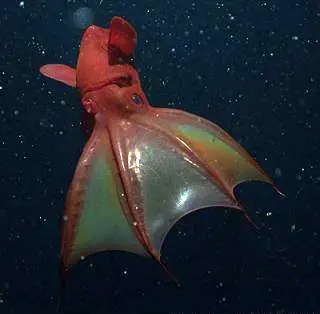
What I like most about comics is that I don’t have to use my imagination in the way that I would reading a "regular" book. The illustrations allow me to simply enjoy the story and watch what is happening. It is a trend right now to adapt classic literature into graphic novels, and I think the graphic versions have reinvigorated the original stories. One of my favorite parts in 20,000 Leagues Under the Sea is when the characters come across a giant octopus almost twice the size of the submarine, which is large enough to house a crew of a few hundred sailors. Being able to actually see the size comparison drives home the massiveness of the beast, which I think could often get lost in the original text. Strangely, one or two chapters from the original story seem to be missing from this graphic novel, but students discovering the story for the first time won’t notice. They will, however, enjoy the color illustrations and will likely appreciate the glimpse into the past as Captain Namor and his Nautilus journey across the underwater world in the 19th century. --Claudio Leon

Thursday, April 28, 2011

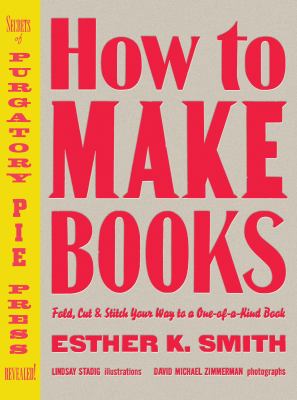
How to Make Books by Esther K. Smith


Looking for new and innovative ways to spice up traditional curriculum? Ester K. Smith's How to Make Books is a hands-on guide to inventive book creation. Complete with diagrams, instructions and historical background, How to Make Books explores a wide variety of book making, including instant books, zines, accordion books, pamphlets, chapbooks, mutant books and stitched books. Students who express interest in writing or illustration often take quickly to the title, and most readers lean in closely when they realize that their ideas can be created, collected and bound by hand! So how does this apply to the classroom? Consider How to Make Books a reference point for imaginative and tactile classroom projects. Whether it be a unit on folktales, exploration of a particular historical period or event, a visual dissection of a plant, or the technical application of geometry, all can be enhanced by incorporating the kinesthetic and personalized activity of book making. --Lisa Buckton


Smith, Esther K. How to Make Books. New York: Potter Craft, 2007.

Friday, April 15, 2011

Crank by Ellen Hopkins


After Kristina returns to her mom’s from reuniting with her wayward father, she is left disheveled, uncertain, scattered and addicted. Now she must re-enter her old life battling a new monster - a deep-seated yearning for crystal meth. As if the plot line isn't enough to lure you in, Hopkins breaches the traditional construct of fiction with a novel composed entirely of narrative, free verse and concrete poems. Poetic language brings the poignant and dangerous struggle of a teenage girl's unexpected and swift addiction to crystal meth to life. A perfect fit for National Poetry Month, Crank is likely to entice the average poetry reader and those resistant to the genre alike. The novel moves at a swift and frenzied pace, expertly emulating the tumultuous effects of drug use. Students are drawn to the raw, and often startling, honesty of the writing, as well as to Kristina's untidy and realistic tale. Crank does not attempt to sweep issues under the carpet, rather, it leaves the room messy and forthright, calling the reader to come in and see. -- Lisa Buckton

Passages Academy will welcome author Ellen Hopkins via Skype™ for a discussion of her work and Q & A session with students later this month. Please stay tuned to our blog for further details!


Hopkins, Ellen. Crank. New York: Margaret K. McElderry Books, 2004.

Thursday, April 14, 2011

Naruto by Masashi Kishimoto


"I will never give up... I promised to succeed no matter the odds against me. And you know why? Because that is my way of living." So says Naruto in book #1 of this ongoing manga series. Learning to overcome your boundaries and finding a way to achieve your goals is what Naruto is all about. This Japanimation series mainly focuses on the way a teenager decides to live his life and the challenges he must face and overcome in order to maintain. As the story, develops, readers learn that any character in Naruto, including Naruto himself, can meet his or her end. Naruto is both entertaining and engaging for any reader who can decode. The illustrated frames will be welcomed by striving readers who will be able to follow along as the story takes them on the rollercoaster ride of broken friendships, betrayals, sacrifices and the search within oneself. Each of the Naruto graphic novels is short and fast-paced which is sure to have students coming back for more. -- Claudio Leon

Farewell Anne, Welcome Lisa & Claudio!

Please join us in waving a virtual and temporary goodbye to co-editor and teammate Anne Lotito Schuh as she takes a leave of absence. She will be out for the remainder of the school year, but she continues to be an essential part of our team. As Anne steps away, we also have exciting news about two additions to our team. Claudio Leon, served as Passages Academy’s Library Assistant from Spring 2007 until Fall 2009 before leaving to pursue his education in computer information technology. Please join us in welcoming him back as our Educational Technology Specialist and library assistant! Lisa Buckton is filling in for Anne at our Crossroads site and we are so happy to have her join us. Readers can look forward to weekly posts from both Claudio and Lisa.

Anja & Jessica

Wednesday, April 13, 2011

Foolish/Unfoolish: Reflections on Love by Ashanti


In Ashanti’s first sentence, she lets readers know that she writes poetry and reflections in a journal, and has for a very long time. In her words, “I’d come up with an idea at a club or in the car waiting for a friend and as soon as I’d get home I’d write it in my book as poetry.” The positive messages about writing and reflection abound in the introduction, making it clear that this is more than just another collection of poetry. Each poem included in the book is preceded by a personal story that lets the reader know exactly what Ashanti was going through at the time of writing. Poems are often followed with a written reflection and an update on where the poem may have gone -- sometimes they became lyrics in her hit songs. While the poems are all quite literal, and the stories almost exclusively about love and relationships, students can relate to the poems and their context. This is a great tool for connecting aspiring writers with a true success story. Ashanti may not be the hottest singer on the radio right now, but not so long ago she was, and students definitely know her name. It’s refreshing to read that she writes her own material, and it all started in journal entries at the young age of thirteen. This is another great choice for students looking for love poetry, with a little inspirational writing on the side.

Ashanti. Foolish/Unfoolish: Reflections on Love. New York: Hyperion, 2002.

Monday, April 11, 2011

The 100 Best African American Poems Edited by Nikki Giovanni


“Poems are like clouds on a June morning or two scoops of chocolate ice cream on a sugar cone in August . . . something everyone can enjoy. . . . Something you don’t think too much about until it is in Season. Then you deliciously anticipate the perfection.” So begins Giovanni’s introduction to this welcome new anthology of poetry, her words capturing how many of us feel at the dawn of each April. Readers will glow with recognition when they come across classics by Brooks, Dunbar, Evans, Clifton and Shakur, and experience fresh inspiration in character, perspective and voice while reading contributions from less-widely known poets like Jim Seibles and Truth Thomas. The attractively designed hardcover volume includes a CD with readings of 36 of the poems which can draw students in and support conversations on how to read a poem and understand a poem for the uninitiated and the beginner.

Giovanni, Nikki, Ed. The Best 100 African American Poems. Naperville: Sourcebooks, 2010.

Wednesday, April 6, 2011

Programming Spotlight: Janet Tashjian & Jesse Eisenberg

“Writing is re-writing,” author Janet Tashjian said repeatedly during her Skype visit to Boys Town on March 30, 2011, as her face and voice leaped from the 27-inch iMac screen. Speaking separately with both the boys’ and girls’ high school English classes, which had just finished reading her novels, The Gospel According to Larry and Vote for Larry, Janet Tashjian’s energy was as infectious as her writing.

Mrs. Tashjian made reference to Tim O’Brien’s The Things They Carried, Jack Gantos’ Hole in My Life and Writing Down the Bones by Natalie Goldberg as influential texts that helped her segue into a full-time writer. Excited by Passages students’ many informed questions and their writing, which she had read prior to the visit, Mrs. Tashjian held up a marble notebook similar to the type our students use to demonstrate how she still writes in longhand.

The students and Mrs. Tashjian were equally excited to welcome Jesse Eisenberg, recent Academy Award nominee and long time Passages friend, to the author visit. Mr. Eisenberg performed and recorded the audio version of the “Larry” books, and his voice has been a consistent part of the classroom lessons, modeling both the op-ed articles and creative realistic fiction found in Mrs. Tashjian’s work. -- L. A. Gabay

L.A. Gabay teaches English and is available for Skype visits.

Friday, April 1, 2011

Falling Hard: 100 Love Poems by Teens Edited by Betsy Franco


One of the most frequent requests I’ve received over the years (well, probably second to demands for urban/street/realistic fiction) is for love poems, and so I was thrilled when this anthology came out in paperback last year. Falling Hard: 100 Love Poems by Teens, Betsy Franco’s compilation, finally gives students what they want. Franco collected these poems from around the world as teens sent her their submissions via email. Diversity is ample, but the poetry stays true to the title with a focus on love, albeit love in its many forms. Whet students’ appetite with short poems like “Love is Like”: “the sweetness of honey/ falling from a bee hive./ You have to be careful/ not to get stung.” A great follow up to the teen who has just finished Tupac’s The Rose that Grew From Concrete or the reader who is busy composing notes to loved ones and searching for a poem to add to an epistle. Sophisticated readers may enjoy pairing it with Plato’s Symposium or Shakespeare’s sonnets.

Franco, Betsy, Ed. Falling Hard: 100 Love Poems by Teens. Somerville: Candlewick Press, 2010.

Wednesday, March 30, 2011

The Deep: The Extraordinary Creatures of the Abyss by Claire Nouvian


Have you ever seen a googly-eyed glass squid, aka Teuthowenia pellucida? A vampire squid? A glowing sucker octopus? Passages students haven’t either, and although seeing is believing, the photographs in The Deep are often so surprising that many viewers react by insisting they’re not real. Truly the last frontier on Earth, “With an average depth of 3800 meters, the oceans offer 99% of the space where life can develop . . . A staggering thought.” And while humans have sought to dissect and document every species they can get their hands on, thousands and thousands of organisms slip through scientists’ grasp because they inhabit depths rarely accessed. This gorgeous coffee-table sized book collects over 200 incredible photographs of these beings in their bioluminescent splendor and offers the reader a view of their dark and glowing world with basic facts, narrative captions, sophisticated essays, and an understated marker on the side of each page to indicate the depths at which each organism has been spotted. Readers will be be entranced, disbelieving, and full of questions. A perfect text to instigate inquiry, as well as a handy authentic and sophisticated text for teaching features of pictorials. Includes numbers of interest pertaining to the deep sea (pg 246), a one-page glossary, a one-page index, a one-page bibliography, and credits.

Nouvian, Claire Ed. The Deep. Chicago: The University of Chicago, 2007.

Tuesday, March 29, 2011

Cosmogirl! Words to Live By


“Women’s place is in the House-- and in the Senate.” juxtaposed a few pages away from “I love being a girl because I like making guys turn their head.” Hmm. While some of the quotes in this tiny book fall a little short of inspiration, I still strongly recommend this book because it has enough fluff to appeal to a reader looking for light reading combined with enough wisdom and provocative content to instigate deeper incidental thinking or thoughtful conversation. Each page features one to three quotes from individuals both famous and anonymously cited only by first name, age (teens), and the fact that she is a reader of Cosmogirl. This book could be a simple way to locate quotes to kick off a women’s history month inquiry project. The book is divided up into seven chapters covering It’s a Girl Thing, Love Lines, Spirit, Friends and Family, Tough Stuff, Dream it, Be it, and Life Lessons. With an introduction from the magazine’s editor-in-chief and an index to the famous folks quoted inside, the short 212 pages are more addictive than the cover might suggest.

Monday, March 28, 2011

Back in the Days by Jamel Shabazz


Get ready to enter a time warp as you open this book and step into New York City in the 1980s. Photographer Shabazz, who grew up in Brooklyn, knows how to capture the life of the streets: kids hanging out, couples and friends posing, and graffiti on the walls dare the viewer to challenge their authenticity. These pictures are so real, they could have been taken today -- but the older subway cars and the fashion give it away. These were the days of Sergio Valente jeans, Cazal glasses, and Puma and Adidas sneakers. In portrait after portrait, the subjects know they look good, and they work it for the camera, crossing their arms and sticking out their hips. My personal favorites are the ones showcasing matching outfits shared by friends, lovers and entire crews. DYFJ staff members almost always get a kick out of this book as they re-live the clothes of the eighties and talk to the students about how New York City used to look. This book is highly engaging and a real stress-free read.

Shabazz, Jamel. Back in the Days. New York: powerHouse Books, 2001.

Wednesday, March 23, 2011

Bayou: Volume One by Jeremy Love

Graphic novel, historical fiction, and fantasy all rolled into one eye-catching and compelling read, Bayou tells the story of Lee Wagstaff, an African-American girl living in Mississippi in 1933. When her white friend, Lily, is captured by Cotton-Eyed Joe, a fantastical creature, only Lee knows the truth, a truth that may possibly set her father free after he is accused of Lily’s disappearance. Lee crosses over into the fantasy world in hopes of bringing Lily back and is aided by Bayou, a friendly monster that vows to protect her. Tropes on southern history, dialect, folktales, religion, music and race relations are explored metaphorically, literally and visually on almost every page. Some pages are ripe with dialogue, while others simply let the artwork establish setting and mood while moving the plot forward. After racing through the first two volumes, this reader was left anxiously awaiting the release of the newest addition to the series. Students seem to be most drawn to the vivid full-color artwork and theme of injustice by their own curiosity of the highly charged setting.

Love, Jeremy. Bayou: Volume One. New York: DC Comics, 2009.

Thursday, March 17, 2011

Dogs (Eyewitness Companions) by Dr. Bruce Fogle


Always a hit with the dog lovers among us, this book is compact and concise, making it the perfect resource for quick reference. While it has plenty of factual information about the dog's origin as a species and its present state as a domesticated pet, the real draw is the breakdown of breeds. Divided into categories by size (small, medium, large, and extra large), each breed listed is described and illustrated with specific details that apply to each one. Most useful perhaps is the information regarding temperaments and time consumption for grooming and training. It is our go-to book at Summit when someone wants to show off what their dog looks like, or more often, what the dog of their dreams looks like. Also handy is the section in back about training, taking care of and keeping a dog as a pet.

Fogle, Bruce. Dogs. New York: Dorling Kindersley, 2006. Eyewitness Companions.

Wednesday, March 16, 2011

Ripley's Believe It or Not: Enter if You Dare

Conjoined crocodile twins, a 22-inch tall man, a faceless cat, a woman with an elephant trunk nose, a man with tattooed eyeballs: what do they all have in common? They can all be found in Ripley’s Believe it or Not: Enter if You Dare. All of the Ripley’s books are a huge hit with our students who are drawn in by the eye-popping full-color photos of strange-but-true oddities from around the world. The series is perfect for shared reading because the reader can’t help but express their reactions vocally, turning to their neighbor to ensure he or she is equally shocked and amazed. Our most reluctant readers are highly motivated to read the brief captions accompanying each photo by a desire to learn more about just what it is they are looking at. Available in hard cover only, teachers are encouraged to borrow Ripley's books for classroom use.

Barratt, Judy and Sandy McFall, Eds. Ripley’s Believe It or Not: Enter if You Dare. Orlando, FL: Ripley Publishing, 2010.

Tuesday, March 15, 2011

Yo’ Mama is So... by Hugh Payne


Hugh Payne wants you to know he has nothing against yo mama. He hopes she has a sense of humor. This little 256 page joke book averages four one-liners per page and is a perfect stress-free read for the reader who likes his white space riddled with laughs. My favorite part of this volume are the insults between famous people, like Golda Meir on Moshe Dayan : “Don’t be so humble, Moshe, you’re not that great” (p154). I can only hope that the student reader already knows who Meir and Dayan are, and if she doesn’t that this will lead to some wondering and research. Other sections educators can appreciate include the “Insults, courtesy of William Shakespeare” (p 209), a wonderful introduction to the Bard if there ever was one for Passages’ students about to dive into encountering Shakespearean English. Teachers will also and the epilogue, in which the author exhorts the reader to apologize when appropriate.

Wednesday, March 9, 2011

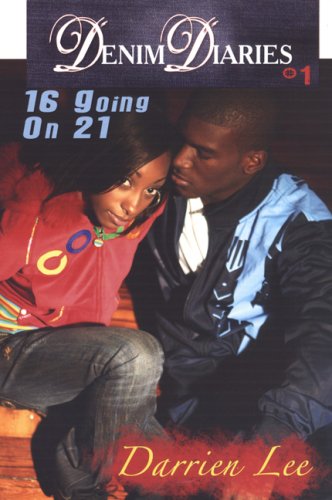
Denim Diaries 1: 16 Going on 21, by Darrien Lee

Good Girl falls for Bad Boy. Good Girl sneaks out of house, despite her mother’s warning, to attend Bad Boy’s party. Shots ring out, and the couple flees only to find blood on Good Girl’s shirt once they stop running. This is the scene presented to readers in the first few pages of Darrien Lee’s 16 Going on 21, the first volume in the “Denim Diaries” series. The Good Girl/Bad Boy construct becomes complicated as we learn more about both Denim and Andre’s back stories. Students looking for a romance high in drama will be drawn to the theatrical dialogue between Denim and Andre. Moralistic in tone throughout, the ending is left unresolved, creating a desire in the reader for the next book in the series.

Lee, Darrien. Denim Diaries 1: 16 Going on 21. West Babylon, NY: Urban Renaissance, 2009.

Monday, March 7, 2011

Played by Dana Davidson


Looking for a love story? This is a really good one with a twist. Ian is attractive and popular, and he considers himself a real player with the ladies. When he is challenged by the leader of the coolest crew in school (the very crew he is proud to be a member of) to get a very uncool girl to sleep with him and fall in love with him, he knows he has to play the game if he wants to keep the respect of his friends. As cruel as this premise sounds, at heart, Ian is not a terrible person, and he feels the guilt of his motions every step of the way as he puts the moves on unsuspecting, plain and brainy Kylie. As their “relationship” develops, Ian begins to see that Kylie is more than she appears and readers will root for him to do the right thing as he struggles to continue with his friends’ dare while his feelings become real. This is an uplifting story for anyone who has ever been played and a good lesson for the players.

Davidson, Dana. Played. New York: Hyperion, 2005.

Friday, March 4, 2011

Skulls by Noah Scalin


Spaghetti skull, acorn skull, mountain skull. Soy sauce skull, wire frame skull, seashell skull. How many different materials do you think you could use to illustrate one subject every day for an entire year? Artist Noah Scalin took on this project in the form of skulls, with an image posted once a day to his blog. After the blog gained massive public interest, a book was published showcasing 180 of the skulls Scalin created for the project, including short captions that describe the materials used in the process. This book is super accessible -- it’s visually appealing because of its small, square size, and every page features a skull or some skulls made in a multitude of media. Students can usually appreciate the absurdity in some, and the skill in others, but they will almost always give it a chance. This is a highly recommended stress free read.

And the blog lives on as fans all over the world continue to submit found skulls and their own handmade skulls. Check it out: www.skulladay.com

Scalin, Noah. Skulls. New York: Sterling Publishing, 2008.

Wednesday, March 2, 2011

Weird but True! 300 Outrageous Facts by National Geographic


What is bellybutton lint made out of? How many people holding hands would it take to encircle the equator? How much can a cloud weigh? In varied fonts and with a combination of digitally created illustrations and photographs, Weird but True delivers the answers to 300 questions you probably never actually asked but will find fascinating anyway. A few may leave you scratching your head like I was when I read “Some sand dunes bark” on page 171 or nodding your head in acknowledegement again, as I was, when I read “If you eat too many carrots your skin can turn orange” (pg 180)-- a harmless experiment you can try with a 6 month old baby. But most will leave the reader with a furrowed brow wondering away: “Human ears evolved from ancient fish gills” (pg 188). A handy index makes your favorite facts findable when you want to prove you’re not making something up, like “99% of people can’t lick their elbows” (pg 199) or “The year 2020 is the next time you’ll see a full moon on Halloween.” (pg 193).

National Geographic. Weird by True! 300 Outrageous Facts. New York: National Geographic Society, 2010.